
Last updated November 25, 2026
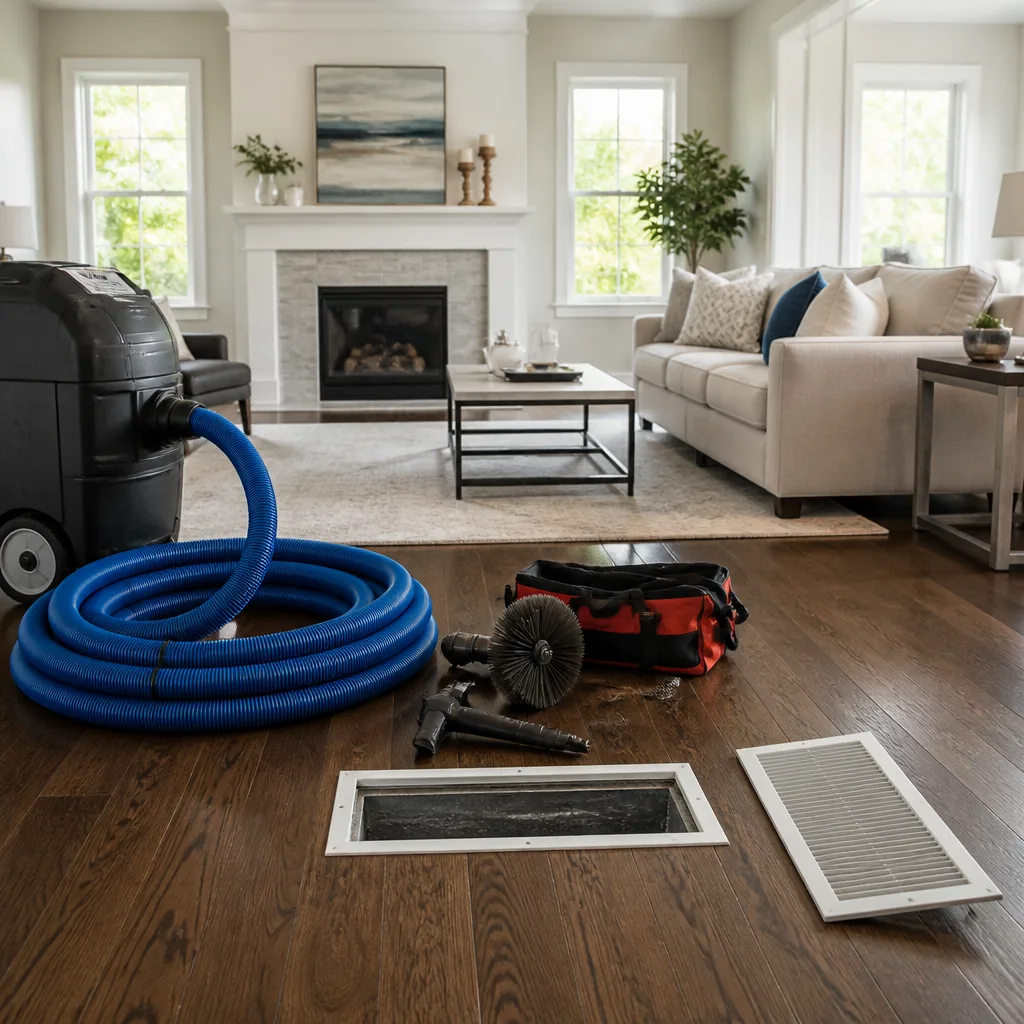 Whole-home duct cleaning
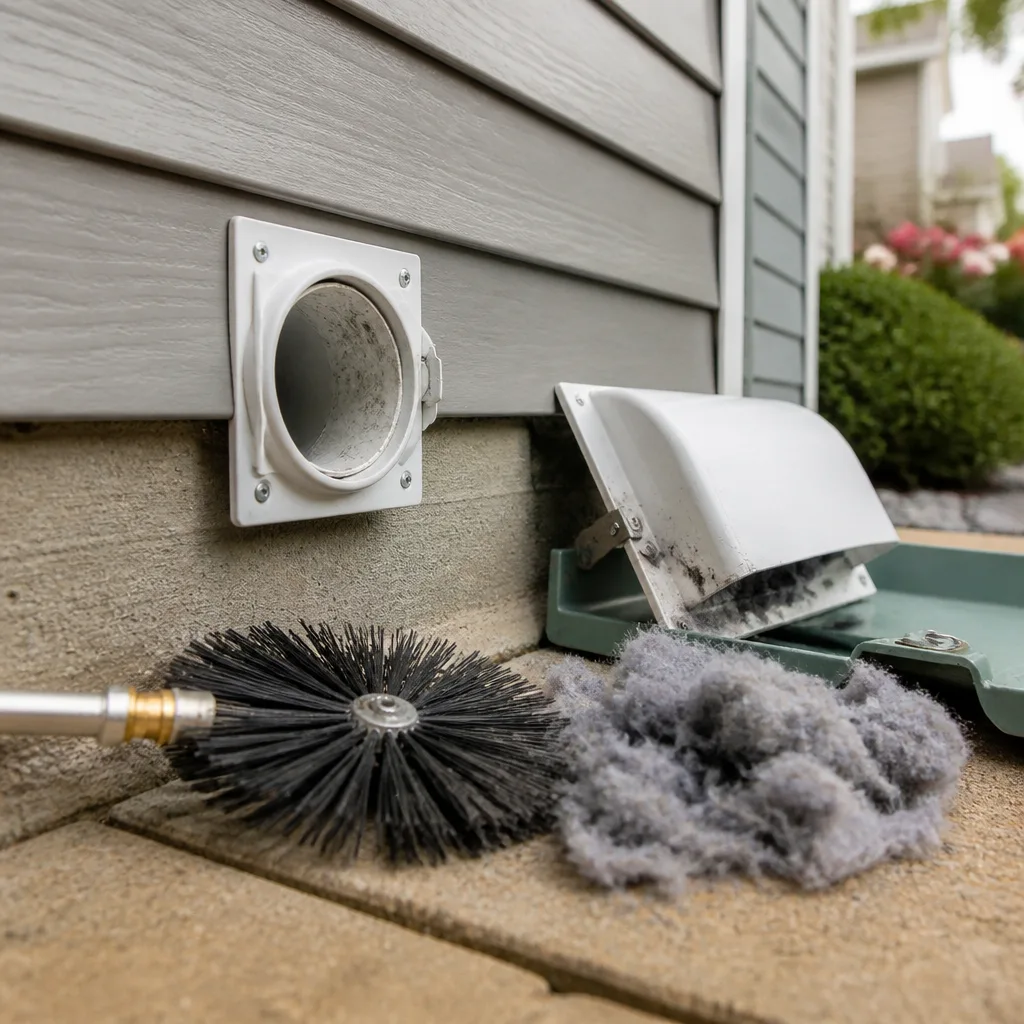 Dryer vent cleaning
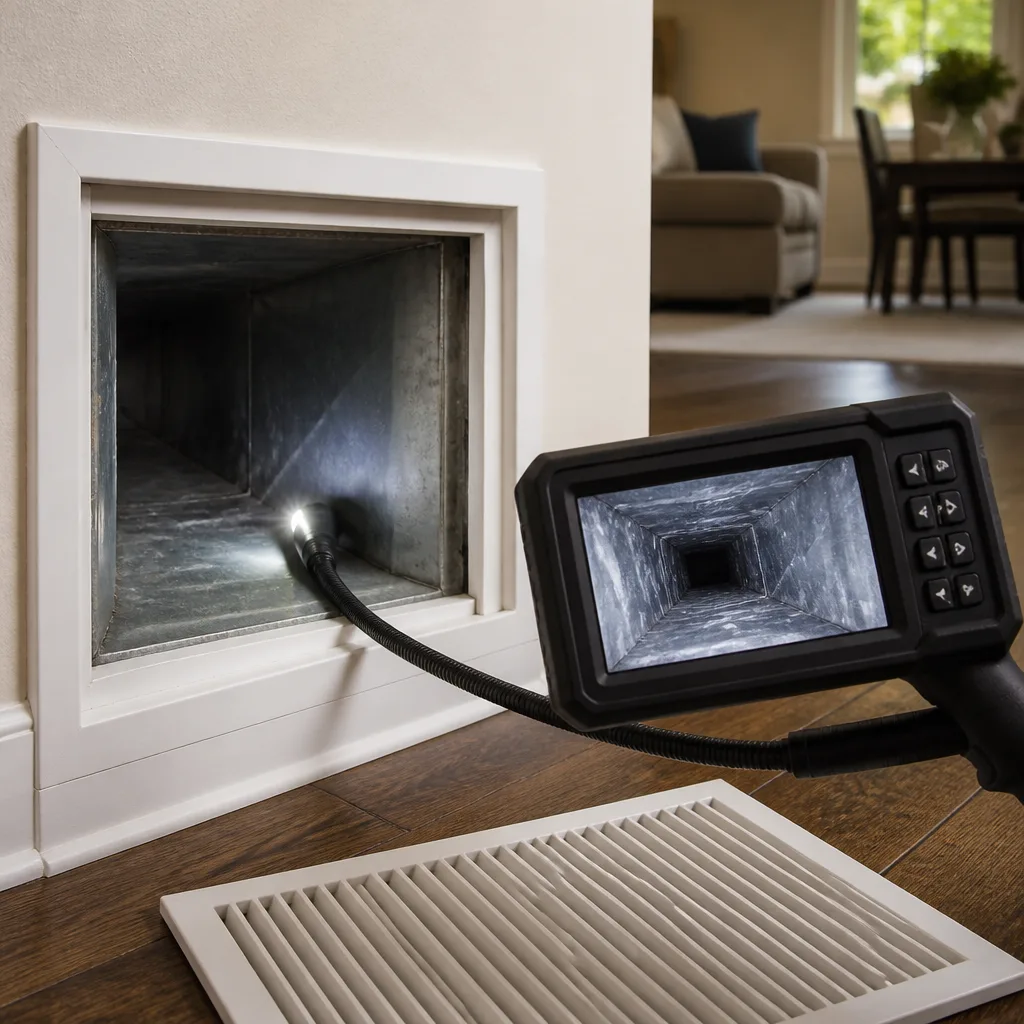 Camera inspection
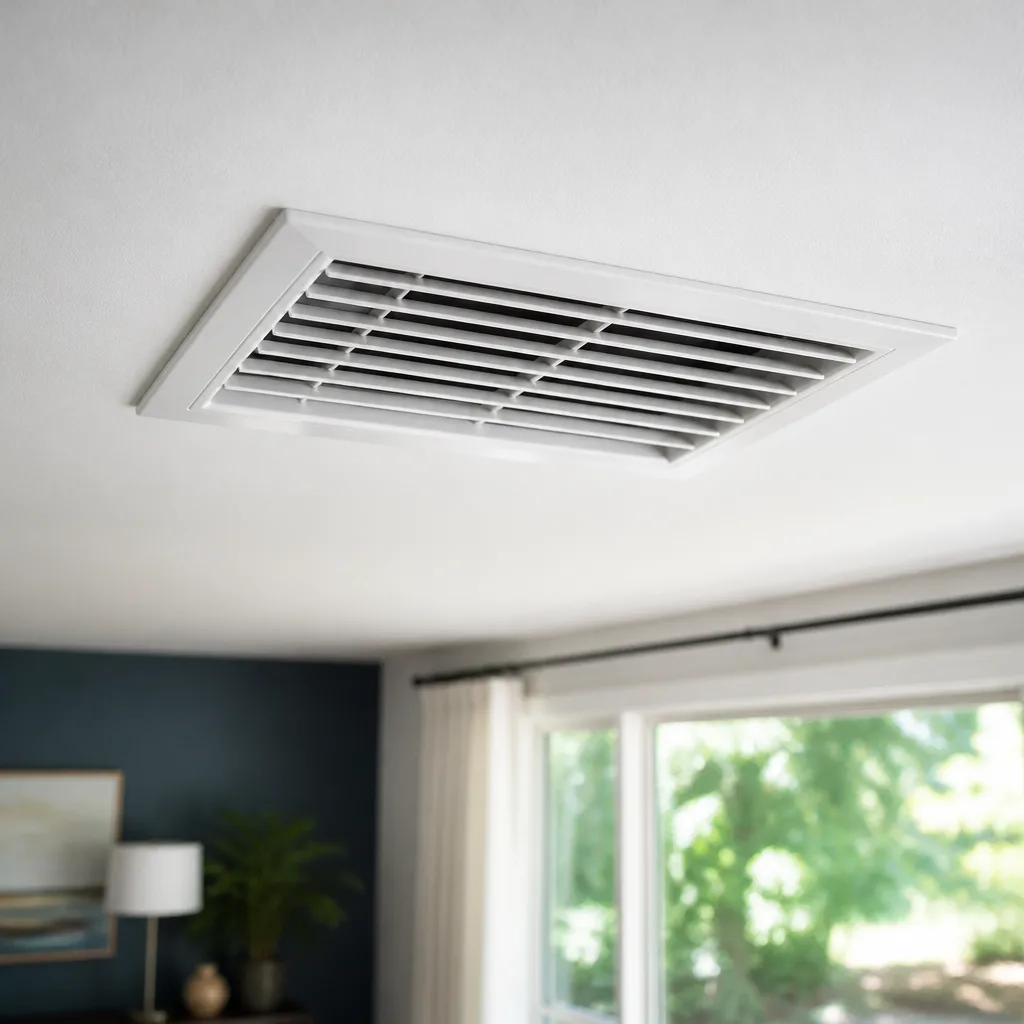 Sanitizing & deodorizing
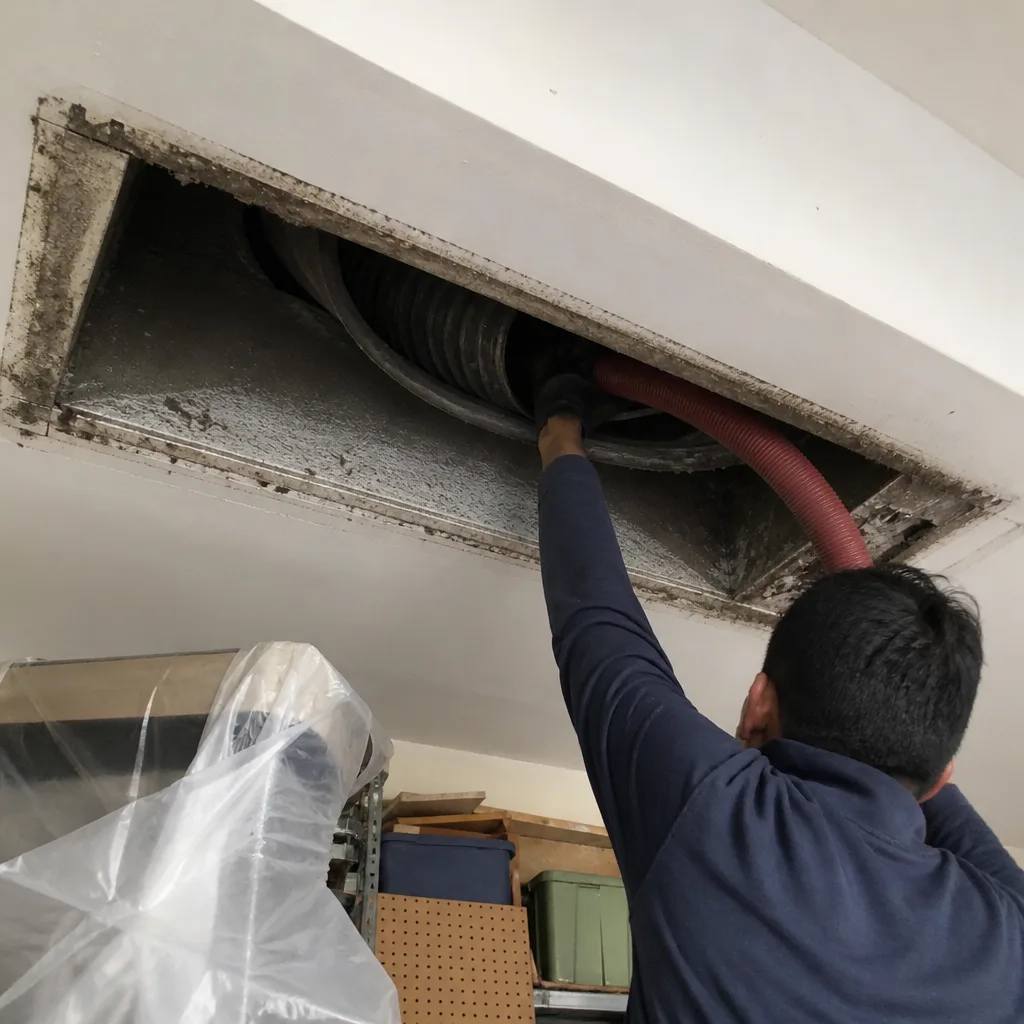
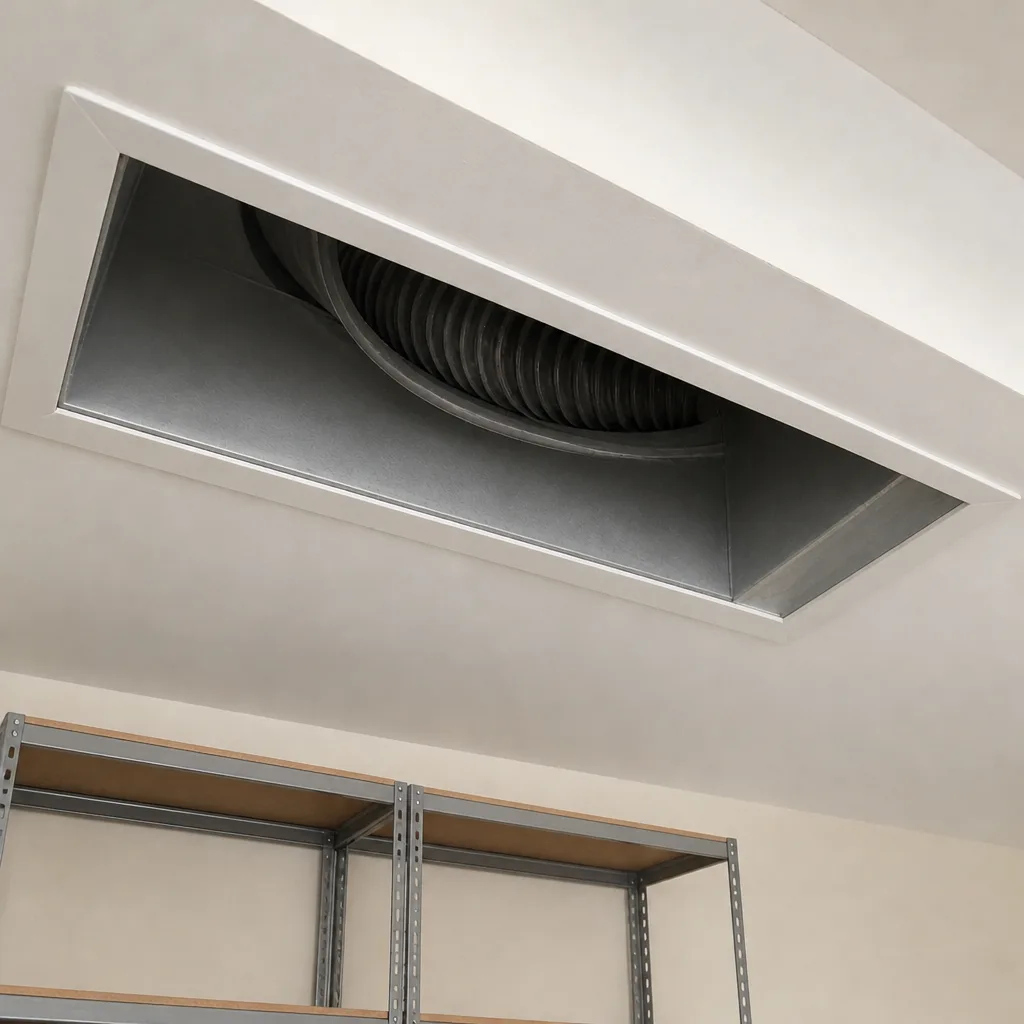
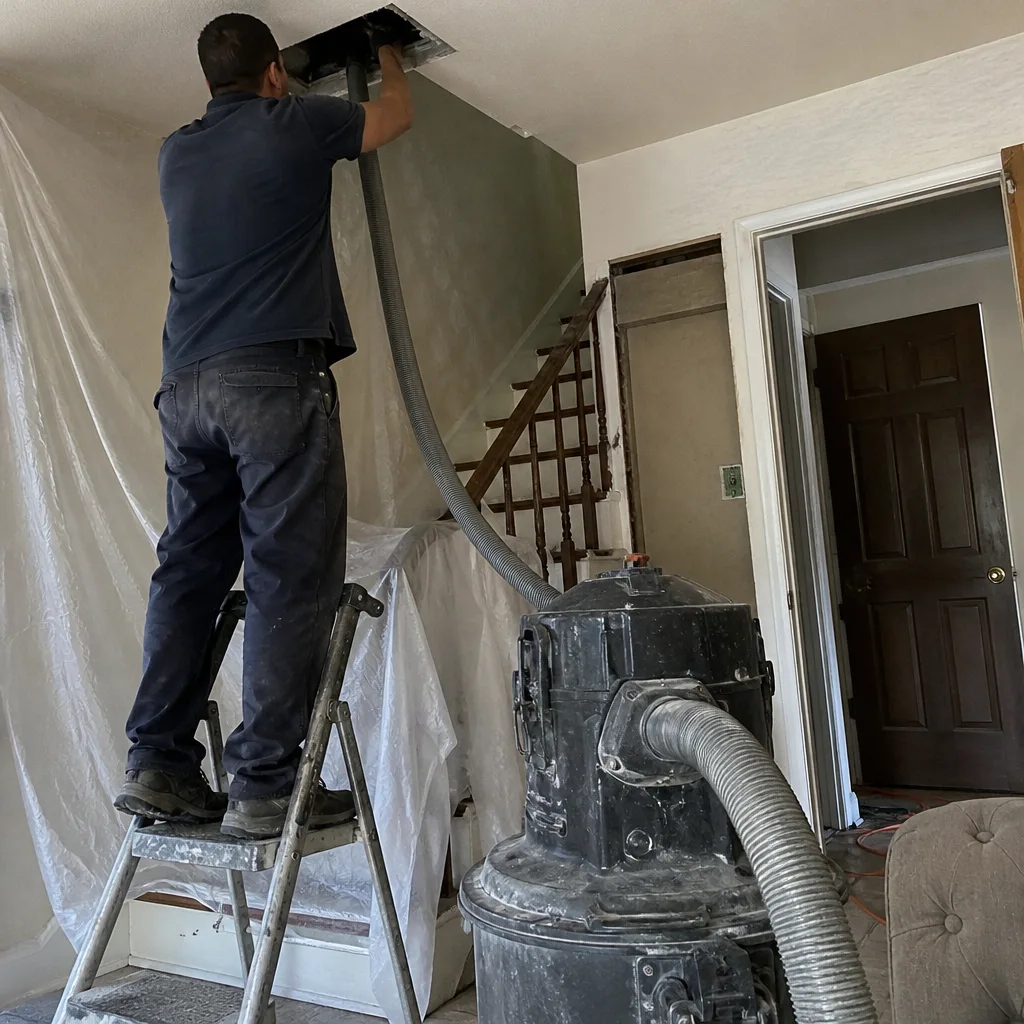
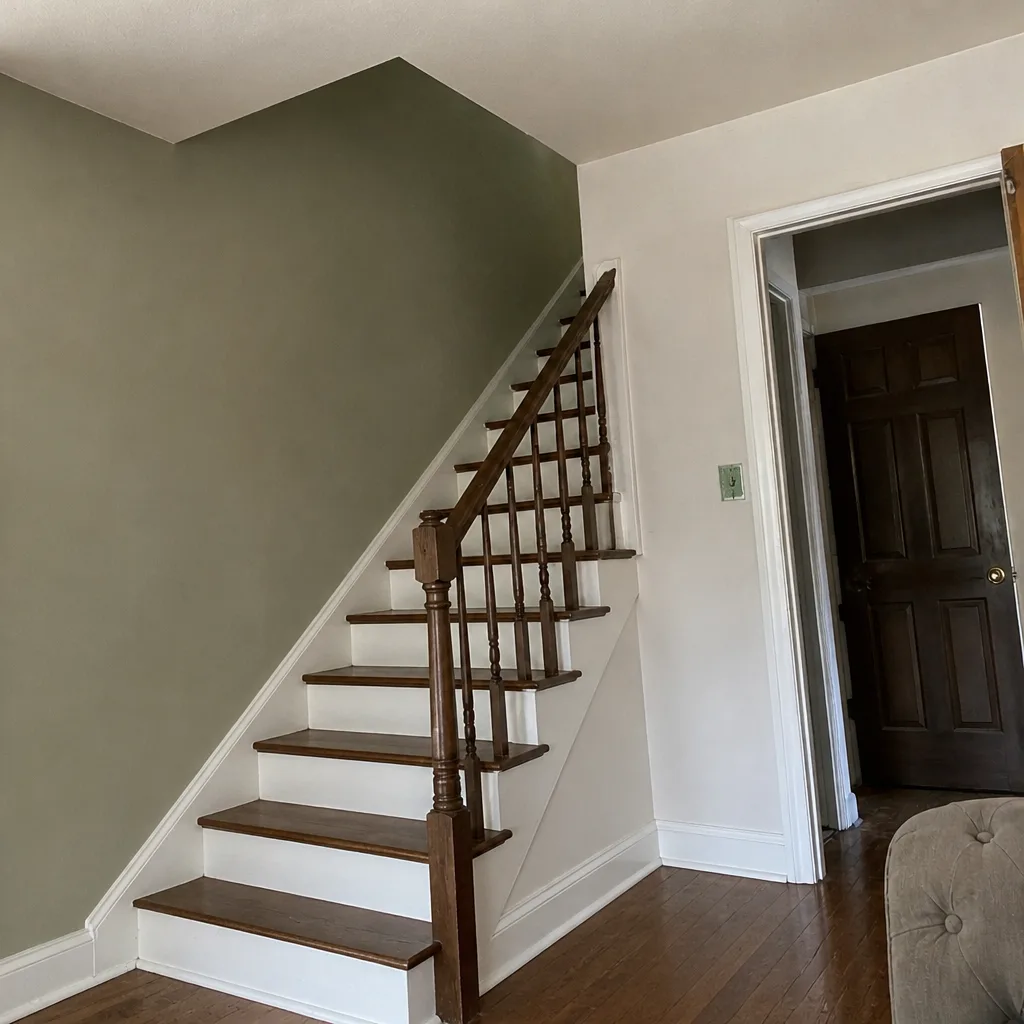
Whole-system duct and dryer vent check with before-and-after photos - you see exactly what came out of your vents
That "$99 whole-house special" is a bait ad - the real number appears once they are in your hallway, or the "clean" is a shop-vac at the register. We photograph the inside of your ducts before and after instead.
DIY vs Professional Air Duct Cleaning: The Meyerland Homeowner’s Decision Guide
Here’s the part most homeowners miss. A shop vac and an attachment can clean the last stretch of a supply run behind a register, and that’s genuinely useful if one bedroom vent is blowing dust. It’s also the ceiling of what consumer tools can reach: the boot just behind the grille, maybe a foot of flex duct, and nothing past the first turn. The main trunk lines, the return plenum, and the air handler cabinet stay untouched no matter how long you work at it. This guide is about finding that line in your own Meyerland home, so you know when a Saturday of your own labor is enough and when it can’t be.
Quick Answer
DIY air duct cleaning works for a single dusty register, light post-renovation debris in one zone, and routine dryer vent cleaning with a proper brush kit. Professional cleaning is the right call when contamination sits in the trunk lines, return plenum, or air handler, when there’s visible mold or a persistent musty odor, or when your Meyerland home still runs its original 1960s or 1970s duct system. The dividing line is access, not effort: consumer tools clean the last 18 inches, and professional rotary brush and HEPA extraction systems clean the rest.
Styles & brands we work with
- Whole-home duct cleaning
- Dryer vent cleaning
- Camera inspection
- Sanitizing & deodorizing
Table of Contents
- What DIY Air Duct Cleaning Can and Cannot Reach
- When DIY Is Genuinely Enough
- Where DIY Creates False Confidence
- What Rotobrush Does That No Consumer Tool Replicates
- Three Questions to Answer Before You Spend a Dollar
- Meyerland’s Housing Stock and Why It Shapes the Decision
- What Each Path Actually Costs
- Dryer Vents: The One Job DIY Often Handles Well
What DIY Air Duct Cleaning Can and Cannot Reach
Consumer duct cleaning tools share one structural limitation: they work from the register opening inward, and they lose effectiveness fast. A vacuum hose pushed into a floor register reaches the boot and a short section of branch duct. A vent brush on a flexible rod gets a little further, maybe around one bend. That’s the honest limit, and it’s the same whether you spend twenty minutes or three hours.
Understanding why requires a quick look at how a residential system is built. Air leaves the air handler through the supply plenum, travels down main trunk lines, splits into branch runs, and exits at registers through boots set into the floor or wall. Return air makes the reverse trip through return grilles, a return duct, and a return plenum back to the cabinet. Conditioned air passes through all of it, and dust settles through all of it, not just in the last arm’s length before the grille.
Here’s the practical split.
- Reachable with consumer tools: the register face and grille, the boot, the first 12 to 18 inches of branch duct, and the inside of the air handler’s return grille.
- Out of reach without professional equipment: main trunk lines, the return plenum, the air handler cabinet and evaporator coil area, long branch runs with multiple turns, and any duct section without a nearby access point.
- Practically untouched by either method unless someone opens it up: duct behind finished walls or ceilings with no access panel, which in older Meyerland homes is common.
That gap matters because the trunk lines carry the largest volume of air and collect the most settled debris over time. Cleaning a register and stopping there is like sweeping a hallway at one end. It looks better, and the rest of the floor is exactly as dusty as before.
When DIY Is Genuinely Enough
We’re not going to tell you professional cleaning is the answer to every dusty register, because it isn’t. There are real situations where a homeowner with the right tool and an hour to spare solves the problem completely. Knowing which is which saves money either way. These are the cases where DIY genuinely holds up.
- One dusty register after a small project. If you patched drywall in a single room and the vent above the work area is blowing dust, that debris is sitting in the boot and the first section of branch duct. Pull the grille, vacuum the boot with a brush attachment, and you’re done. The contamination never reached the trunk line.
- Light post-renovation debris confined to one zone. A remodel that stayed in one room, with the system fan off during the dusty work and registers covered, usually leaves debris in the same small area. Clean that zone, replace the filter, and move on.
- Dryer vent cleaning. This is the one duct job where a homeowner with a proper vent brush kit and a shop vac can do real, complete work, because the run is short, straight, and accessible from both the dryer side and the exterior hood. We’ll cover the details further down.
- Surface dust on grilles and registers. Dust on the face of a return grille is a housekeeping task, not a duct cleaning task. A vacuum and a damp cloth handle it.
What ties these cases together is that the contamination is genuinely local. Nothing has moved into the shared part of the system. That’s the test. If the debris is contained in one branch, DIY can finish the job. If it isn’t, it can’t.
Where DIY Creates False Confidence
The harder problem with DIY isn’t that it fails. It’s that it sometimes appears to succeed. You clean the three registers you can reach, the dust smell fades for a week, and you conclude the system is clean. Meanwhile the return plenum and trunk lines still hold whatever was there, and it keeps feeding the same contamination back into every room. These are the scenarios where that false confidence costs you.
- Post-flood homes. When water has reached ductwork, the problem isn’t dust, it’s moisture and what grows in it. Surfacing the visible end of a run doesn’t address a saturated trunk or a wet plenum. This needs proper inspection before anyone decides the ducts are fine.
- Visible mold near registers. Spots on the boot or the first section of duct usually mean conditions favorable to growth exist deeper in the system. Cleaning what you can see, without addressing the source of the moisture, tends to bring it back.
- Persistent musty odors. An odor that returns within days is a sign the contamination is beyond the cleaned area. It’s also the most common reason homeowners call us after a DIY attempt.
- Original 1960s and 1970s duct systems. Many Meyerland homes still run the ductwork installed when they were built, often with interior duct liner that traps debris and degrades over time. Decades of accumulation in that lining is not something a shop vac reaches, and failing liner is a repair question, not just a cleaning one.
- Dust returning to every room within days. Whole-house dust that resets right after cleaning is a sign the source is in the shared part of the system.
If any of those describe your house, DIY is likely to produce a clean-looking register and an unchanged problem. That’s the point where the next step is a professional assessment of the whole system, including the parts you can’t see.
What Rotobrush Does That No Consumer Tool Replicates
The difference between a shop vac and professional equipment isn’t power. It’s that a Rotobrush system agitates and extracts at the same time, in the same place. A rotating brush whips the duct wall while a HEPA-filtered vacuum pulls air from the same section. Dust that’s been stuck to the wall for years gets broken loose and captured before it can settle somewhere else. Consumer tools do one of those things, and only at the register opening.
That simultaneity is the whole point. Cleaning a duct from one end while vacuuming from another, which is what most DIY attempts amount to, moves debris around rather than removing it. The loosened material drifts downstream and settles in a section you never opened. Within a week or two, the system redistributes it through the house and it looks like nothing was cleaned at all.
The equipment we bring to a Meyerland home is the same class of gear commercial HVAC contractors use: Rotobrush rotary brush systems for mechanical agitation, and Nikro HEPA-filtration equipment to contain and extract what the brush releases, so debris doesn’t redistribute through the house. For serious contamination, things like mold, heavy allergen loads, or post-construction debris in a larger renovation, we bring Abatement Technologies air-quality equipment built for that scenario. Routine dust is not the same job as contamination, and the equipment should match the problem.
Cleaning is also only half of it. Ducts that lose air at loose joints and failing connections pull attic or crawlspace air into the system, which means a freshly cleaned duct gets dirty again from the outside. Duct repair and sealing closes that loop, and it’s the reason cleaned ducts in a Meyerland home stay clean. If you want the deeper version of how the equipment and process fit together, our air duct cleaning page walks through it. Our technicians have up to 11 years of experience working on systems like yours.
Three Questions to Answer Before You Spend a Dollar
Before buying equipment or booking a visit, three questions will tell you which path fits. Answer them honestly and the decision usually makes itself.
- Where is the contamination concentrated? If it’s one register or one room, and it follows a specific event like a small renovation, DIY is reasonable. If it’s throughout the house, or if the smell and dust return to every room, the problem lives in the shared part of the system.
- How old is the duct system, and what’s it made of? A system installed in the 1960s or 1970s, which describes a meaningful share of Meyerland housing, has had decades to accumulate debris and may have interior liner at or past its useful life. Age and material push the answer toward professional inspection.
- What’s actually visible? Look at the register boots and the first section of duct you can see. Stains, dark spotting, or a musty smell when you put your face near the grille means moisture or growth is involved, and that’s beyond a vacuum.
If all three answers point to a local, recent, dry problem, DIY is a sensible choice and you’ll save money. If any one of them points deeper into the system, a professional assessment is the cheaper path in the long run, because you’ll only do the job once. A free estimate from us exists precisely to answer those questions without committing you to anything.
One more consideration on returns: most Meyerland homes have a single large return grille that draws from the whole house. That grille and the plenum behind it collect a disproportionate share of debris, and it’s the section almost no homeowner can reach. In our experience, it’s the difference between a system that looks clean and one that is clean.
Meyerland’s Housing Stock and Why It Shapes the Decision
Meyerland is a neighborhood where the housing stock itself makes this decision more consequential than it might be elsewhere. Plenty of homes here were built in the 1960s and 1970s, and many still have their original duct systems. That matters because original ductwork in that era often used interior duct liner, a sound-dampening material that traps dust, holds onto moisture, and degrades over decades. A shop vac can touch the surface of that liner. It can’t remove what’s embedded in it, and it can’t tell you whether the liner is failing, which is a repair question.
Houston’s climate adds a wrinkle. Long cooling seasons mean the air handler runs hard for most of the year, pulling far more air through the ducts than a shorter-season climate would. More air volume means more dust passing through and settling. It also means any leak at a joint in the system is a leak for more hours, drawing unfiltered attic air into the ducts. Sealing and repair matter here for that reason, not just cleaning.
Renovation is the other recurring theme. When a Meyerland home gets a kitchen or bath remodel, drywall dust and construction debris end up in the return system if registers weren’t sealed off. That’s a routine dust job in the branch runs and a contamination job in the plenum. Two different scenarios, one renovation. This is the kind of case where our HVAC cleaning service often pairs with duct cleaning, because the air handler cabinet and coil collect the same debris the ducts do.
For homeowners and property managers working through older homes, the answer usually isn’t “clean or don’t clean” so much as “clean, then address what’s causing the buildup.” That’s a different service than a one-time vacuum, and it’s how we approach every job in Meyerland.
What Each Path Actually Costs
Both paths cost real money, and it’s worth comparing honestly. DIY costs less in cash and more in your time, and it only works when the problem is local. Professional cleaning costs more upfront and covers the whole system, including the parts that determine whether the problem comes back.
- DIY equipment: a shop vac with a brush attachment, a flexible vent brush kit, and a dryer vent brush set. Modest cost, and reusable for the jobs DIY actually handles well.
- DIY time: an hour for one register, a half day for a handful, plus repeat efforts when the dust comes back.
- Professional cleaning: a flat price per system, agreed before any work starts, based on the written estimate. A whole-system job covers every register, trunk, plenum, and the air handler cabinet.
- Repair and sealing: quoted separately when needed, because it’s a different job from cleaning. Addressing leaks is what keeps a cleaned system clean.
- Air-quality additions: filtration products from Aprilaire or Honeywell, installed as part of the service if you want ongoing protection rather than a one-time clean.
The comparison that matters isn’t DIY price versus professional price. It’s whether the work solves the problem. A DIY job that leaves the trunk lines loaded and lets dust redistribute through the house means paying twice: once for the equipment and once for the professional visit you eventually book. When the problem is genuinely local, DIY wins on price and there’s no argument. When it isn’t, cleaning the whole system once is the lower total cost.
We use one flat price per system and show before-and-after photos of your own ducts, so you can see exactly what was removed. That’s the answer to the bait-and-switch reputation this industry has earned. If a quote looks suspiciously low, ask what it actually covers and whether the trunk lines, plenum, and air handler cabinet are included. Call (877) 492-2022 for a free estimate in Meyerland.
Dryer Vents: The One Job DIY Often Handles Well
Dryer vent cleaning is the exception that proves the rule. The run is short, usually straight or with one or two gentle turns, and accessible from both the dryer connection and the exterior hood. A homeowner with a proper vent brush kit and a shop vac can clean it completely and know the job is done. We say that plainly because it’s true, and because it builds trust for the areas where DIY genuinely can’t reach.
Two cautions. First, clean it on a schedule that matches your household. Lint accumulates faster with more laundry, and a clogged dryer vent is a fire risk, which is why this one is worth staying on top of rather than treating as a someday job. Second, check the exterior hood after cleaning. If lint still packs the flap or the vent is still restricted, something in the run is blocked in a way a brush isn’t reaching, and that’s worth a professional look. Our dryer vent cleaning page covers the full process and what we check.
Air ducts are a different story. The system is larger, the runs are longer, and the critical sections sit behind access panels or behind walls. That’s why dryer vents are a realistic DIY job and full air duct cleaning usually isn’t. It’s not a matter of skill or effort. It’s a matter of whether your tools can physically reach the parts that matter.
See the difference
 Before
 After
 Before
 After
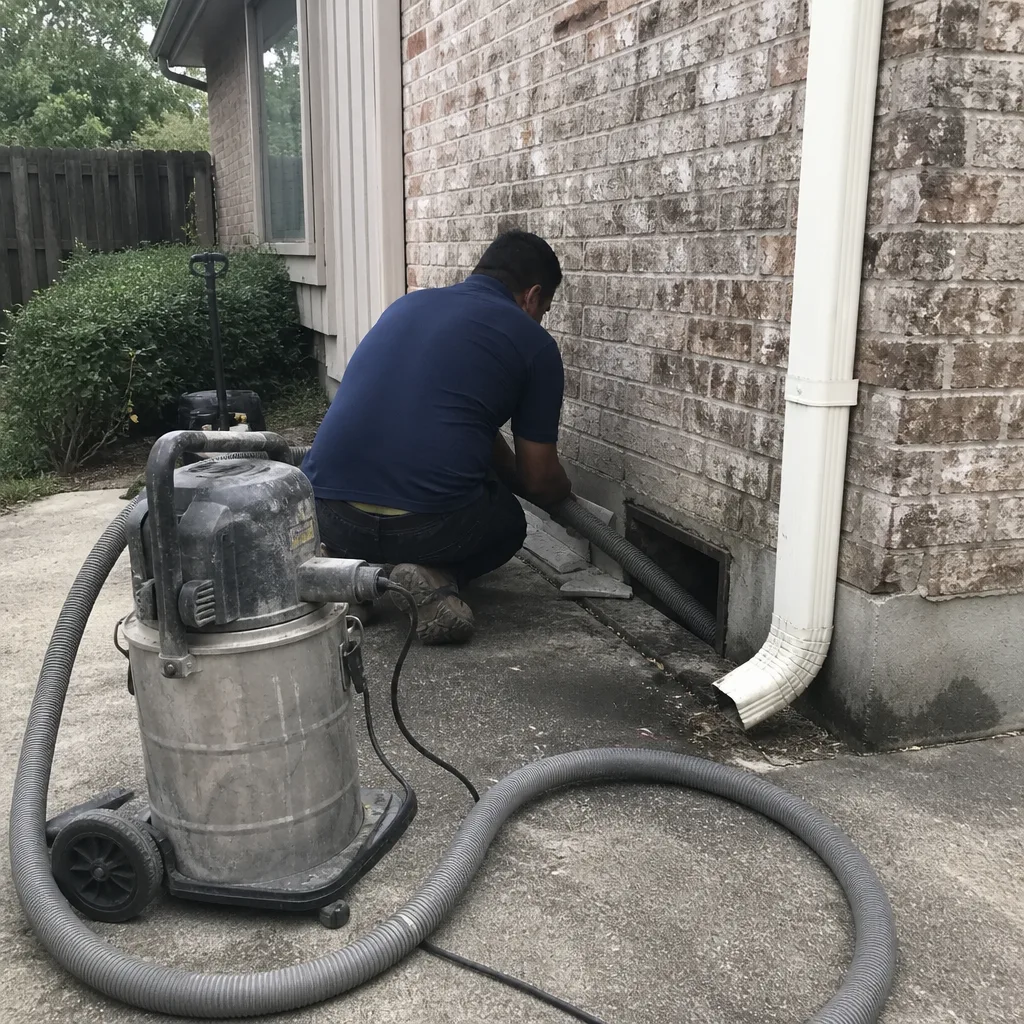 Before
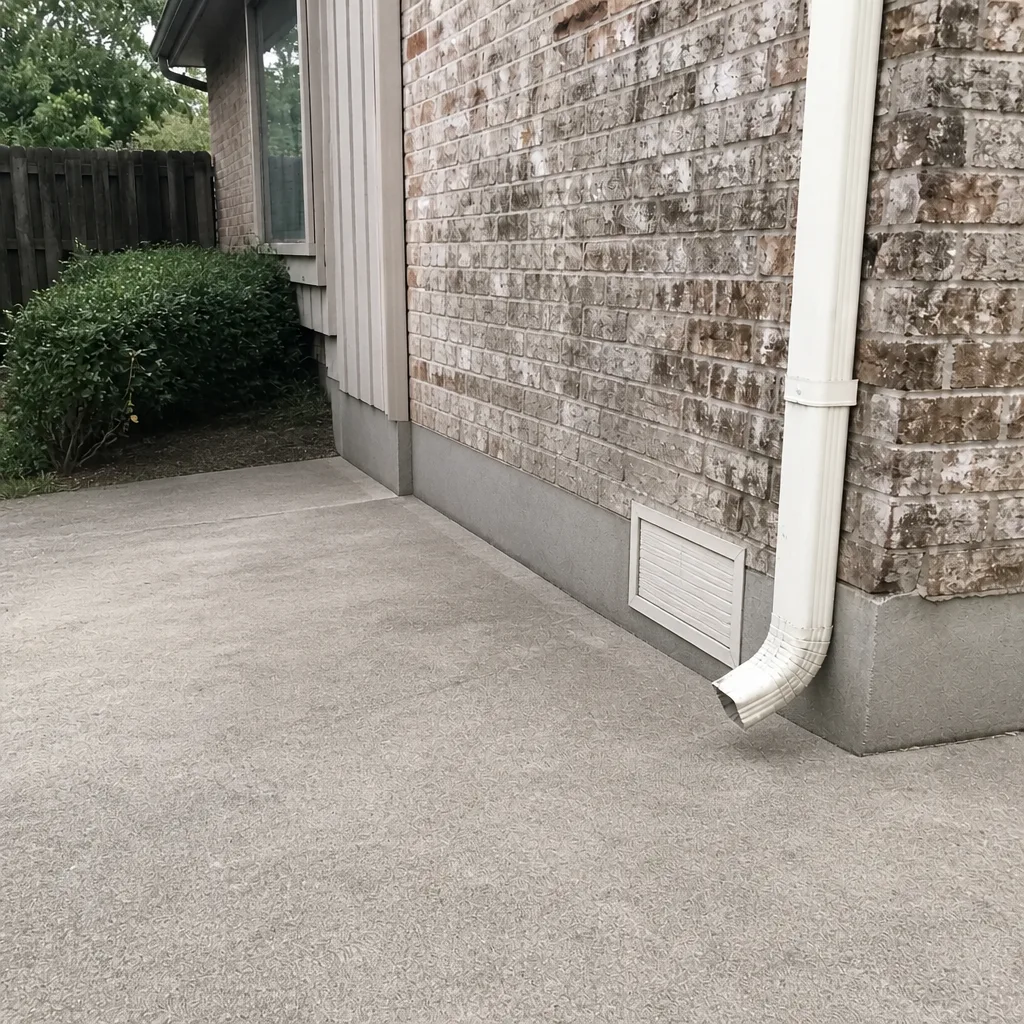 After
Common Mistakes to Avoid
- Cleaning only the registers you can see. That’s the visible end of the problem, not the problem. The trunk lines and return plenum hold most of the debris in any system older than a decade.
- Vacuuming from one end while debris settles at the other. Consumer tools can’t agitate and extract at the same time, so loosened material often ends up in a section you never opened. That’s the redistribution problem professional equipment is built to prevent.
- Ignoring the air handler cabinet and coil. Dust collects there just as it does in the ducts. A home in Meyerland with a dusty cabinet will keep blowing dust through freshly cleaned ducts.
- Assuming a clean-looking register means a clean system. In older Meyerland homes with interior duct liner, the surface you can reach can look fine while the liner behind it holds years of debris and moisture.
- Skipping the filter and the sealing. A clogged filter and leaky joints undo a cleaning in short order. Sealing and a fresh filter are part of keeping the result.
- Buying a shop vac and calling it duct cleaning. It’s a good tool for one register and a finished-job illusion for everything past the boot.
- Treating dryer vent cleaning as optional. This is the one duct job a homeowner can handle well and the one where skipping it carries real fire risk. Stay on it.
When to Call a Professional
Call us when the contamination isn’t local. That means dust returning to every room within days of cleaning, a musty odor that won’t go away, visible mold near registers, original 1960s or 1970s ductwork with failing liner, a return plenum or air handler cabinet that’s never been opened, or a post-flood or post-renovation situation where you can’t see how far the debris and moisture reached. Those are the cases where a shop vac produces a clean-looking register and no real change. Air Duct Cleaning Meyerland offers free estimates in Meyerland. Call (877) 492-2022; we answer 24/7, and fast dispatch runs from 7am to 7pm, Sunday through Friday.
Frequently Asked Questions
You can clean the register face, the boot, and the first 12 to 18 inches of branch duct with a shop vac and a brush attachment, and for a single dusty register that’s a complete job. You can’t reach the trunk lines, return plenum, or air handler cabinet, which is where most of a system’s debris sits. If the problem is whole-house dust or a persistent odor, a shop vac won’t solve it. Call (877) 492-2022 for a free estimate if you’re not sure which scenario you’re in.
Not particularly, as long as you stay out of the air handler cabinet and don’t open sealed sections of ductwork. The real risk isn’t injury, it’s false confidence: the visible end looks clean while contamination stays in the shared part of the system. Leave the air handler and any electrical or refrigerant components to a technician. For a professional assessment, call (877) 492-2022.
If your house was built in the 1960s or 1970s and the ducts haven’t been replaced, they’re likely original, often with interior liner that traps debris. Look at the boot behind a register and check whether you can see a fibrous lining inside the duct. Original ductwork in a Meyerland home usually means the system is worth a professional inspection before you spend anything on cleaning. Call (877) 492-2022 to book a free estimate.
We quote a flat price per system based on what the job actually involves, and the written estimate sets the final price. That price covers every register, the trunk lines, the return plenum, and the air handler cabinet, which is what makes it a whole-system clean rather than a register wipe. If a quote looks unusually low, ask which sections it includes. Call (877) 492-2022 for a free estimate.
Because the visible result looks fine while the actual problem remains. You clean the reachable registers, the dust smell fades for a week, then whole-house dust returns because the trunk lines and plenum were never touched. The regret isn’t the effort, it’s the assumption that a clean register means a clean system. Call (877) 492-2022 if you’ve been through that cycle.
Yes. Cleaning and duct repair and sealing are handled together, which is the point: cleaning without sealing lets attic air leak into the system and dirty it again, and sealing without cleaning traps debris behind the seal. We also install Aprilaire and Honeywell air-quality products as part of the service when you want ongoing filtration. Call (877) 492-2022 for a free estimate in Meyerland.
The Bottom Line
DIY air duct cleaning isn’t a bad idea. It’s a limited one, and knowing where the limits fall tells you exactly whether to buy a brush kit or book an estimate. Reachable with consumer tools: one register, one boot, a foot of branch duct, and a dryer vent. Out of reach: trunk lines, return plenum, air handler cabinet, and anything behind a wall. If the problem is local and recent, clean it yourself and save the money. If it’s system-wide, if there’s mold or odor, or if your Meyerland home still runs original 1960s or 1970s ductwork, professional cleaning with rotary brush and HEPA extraction is the cheaper total answer, especially when repair and sealing come with it. Call (877) 492-2022 for a free estimate.
Air Duct Cleaning Meyerland provides residential and commercial air duct cleaning, dryer vent cleaning, air duct cleaning Meyerland, HVAC cleaning, and duct repair and sealing. We answer 24/7. Fast dispatch from 7am to 7pm, Sunday through Friday.
Written by the team at Air Duct Cleaning Meyerland.