
Last updated November 25, 2026
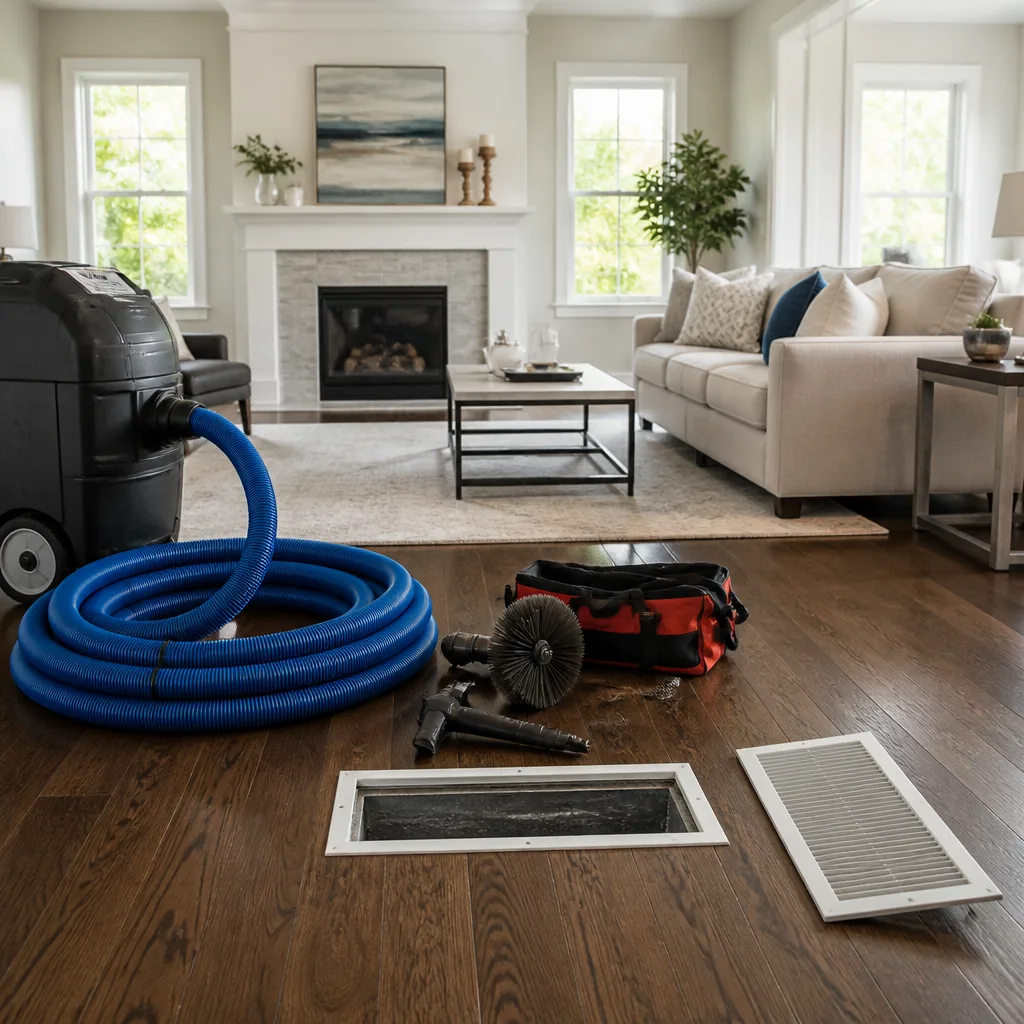 Whole-home duct cleaning
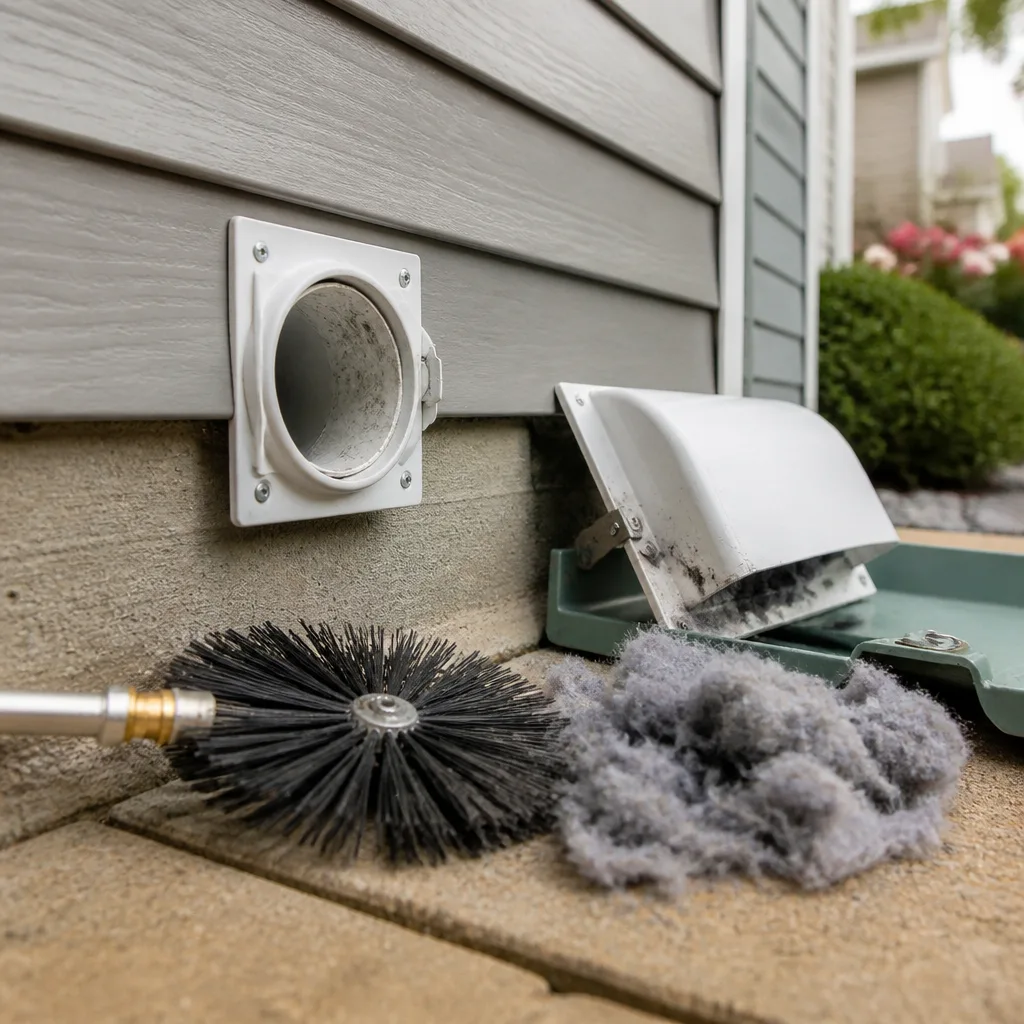 Dryer vent cleaning
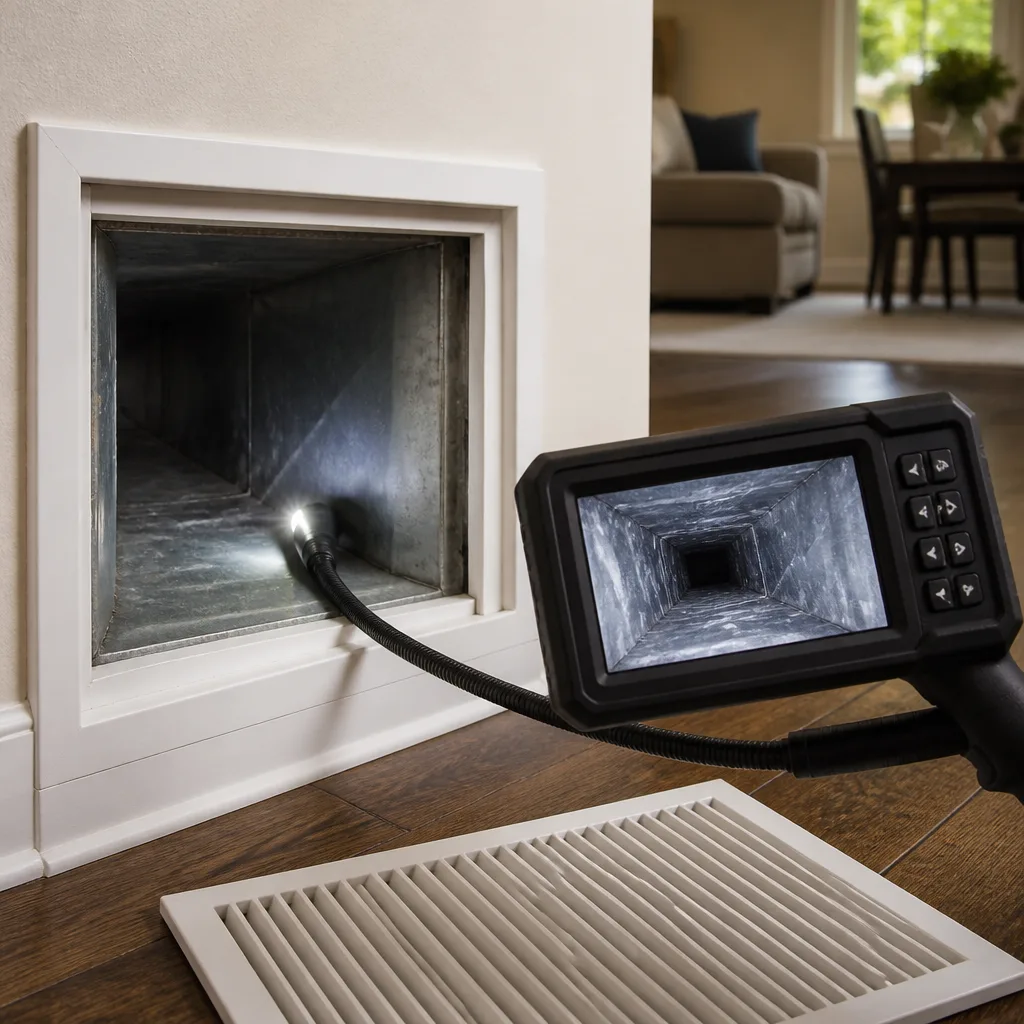 Camera inspection
 Sanitizing & deodorizing
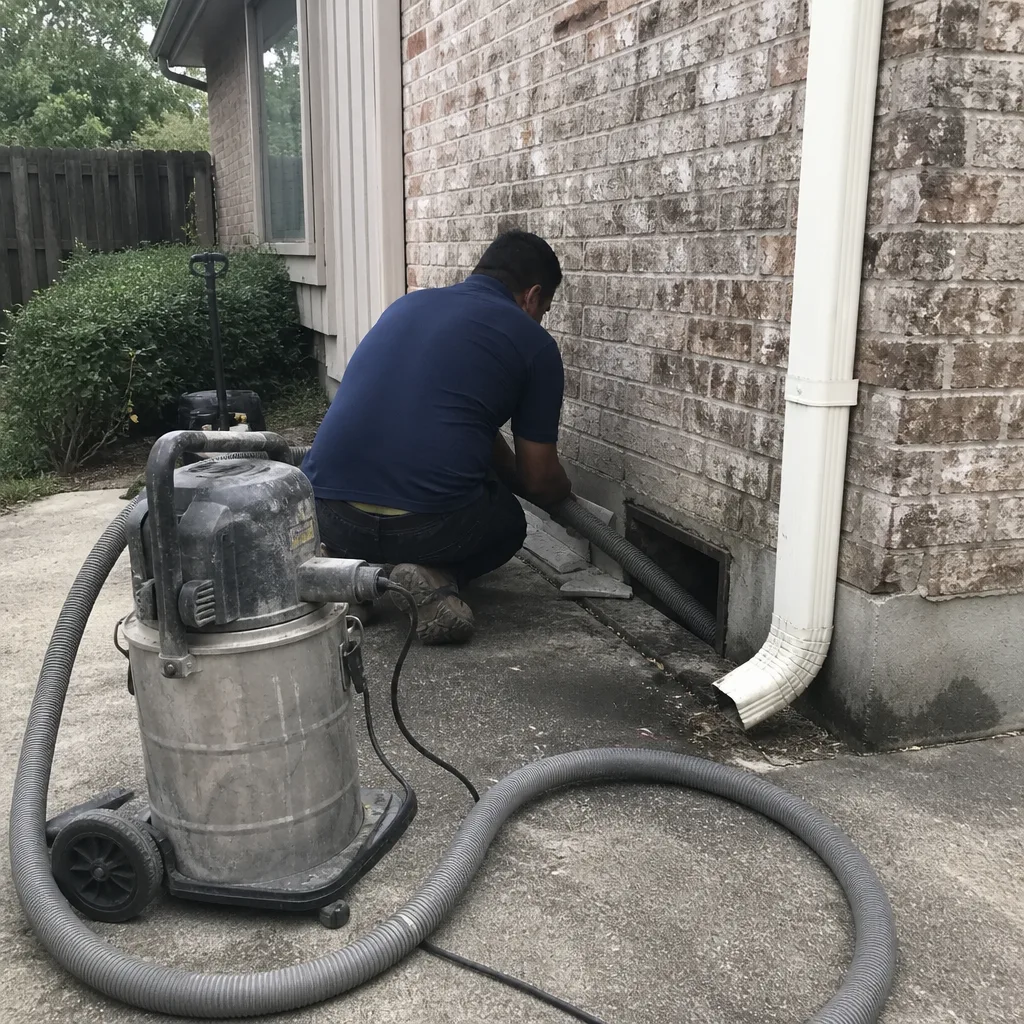
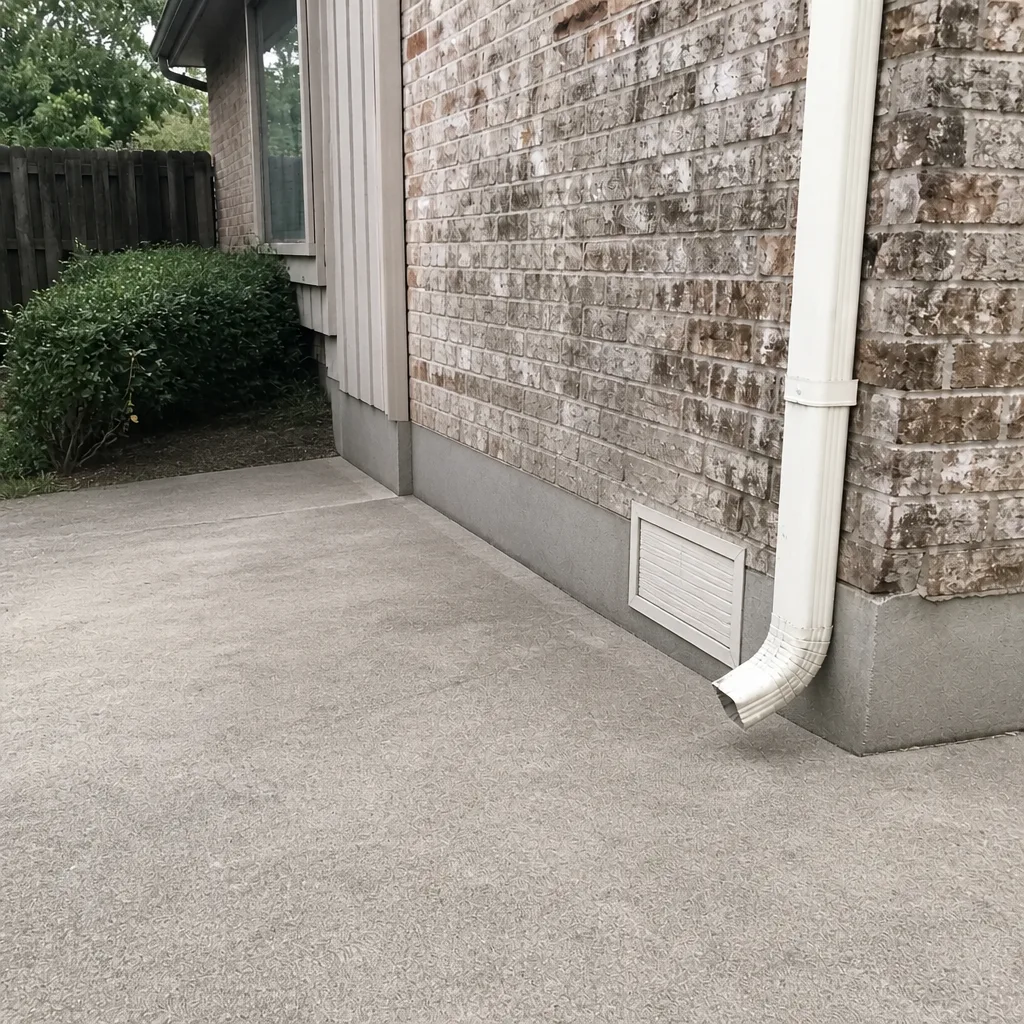
Whole-system duct and dryer vent check with before-and-after photos - you see exactly what came out of your vents
That "$99 whole-house special" is a bait ad - the real number appears once they are in your hallway, or the "clean" is a shop-vac at the register. We photograph the inside of your ducts before and after instead.
Air Duct Cleaning Warning Signs: A Meyerland Homeowner’s Reference Guide
Most duct problems don’t announce themselves with a bang. They show up as a soft gray halo around a supply register, a bedroom that never quite cools down, or a faint smell you notice only when the air first kicks on. Individually, each of these looks minor enough to ignore. Wiped off, vacuumed up, explained away. But when you read them together, they tell a specific story about what’s happening inside your ductwork. In this guide, we’ll walk you through the physical evidence Meyerland homeowners can actually see and smell, what each sign points to upstream, and how to triage which signals need a professional inspection soon versus which you can watch for another month. You’ll learn where to look, what to look for, and how to tell a real problem from ordinary house dust.
Quick Answer
The main air duct cleaning warning signs in a Meyerland home are dust rings and dark streaks around supply registers, rising HVAC runtime without a change in how you use your system, uneven room temperatures, musty or unusual odors when the air first starts moving, and visible sagging in flex duct runs, especially after heavy rain. Any two or three of these appearing together usually points to a contamination or air-loss problem in the ductwork itself, not the HVAC equipment. A professional inspection sorts out which it is before you spend money on repairs.
Styles & brands we work with
- Whole-home duct cleaning
- Dryer vent cleaning
- Camera inspection
- Sanitizing & deodorizing
Table of Contents
- What Your Registers Are Telling You
- HVAC Performance Signals That Point to Ducts
- Smell Diagnostics: Mold, Rodents, and Burning Debris
- Post-Flood Warning Signs in Meyerland Homes
- How to Triage: Same-Week Inspection vs. 30-Day Watch List
- What a Professional Duct Inspection Actually Involves
- What to Do After Cleaned Ducts Stay Clean
What Your Registers Are Telling You
Supply registers are the easiest place to read duct condition, because they’re the only spot where the ductwork hands you physical evidence you can touch. A dust ring around the edge of a register isn’t just a cleaning chore. It’s a pressure signature. When a duct run has leaks downstream or airflow has been throttled by heavy buildup, air pushes past the register frame instead of flowing cleanly through the louvers, and dust gets carried out along the perimeter. Wipe it off and it comes back within weeks. That return visit is the actual message.
Here’s how to read the patterns:
- Even gray dust ring around the perimeter. Normal airflow plus a slightly loose register seal. Common and low-risk, but worth checking for leaks at the boot.
- Dark, streaky smudges radiating from one corner. Air escaping at a specific gap. Points to a gap in the supply boot or flex duct connection just behind the register, and it’s typically letting conditioned air into the attic or wall cavity instead of your room.
- Black or sooty film on the louvers themselves. Something is carrying combustion or oil residue through the airstream. Worth a close look at the system upstream before cleaning is even discussed.
- Condensation streaks or water staining at the register. Moisture is present inside the duct or on the grille. In a Meyerland home, where humidity runs high most of the year, this usually means an insulation or sweating problem tied to duct sealing, not just surface buildup.
- Fuzzy or fibrous discoloration on the register face. Often a sign that mold or mildew has established somewhere upstream and spores are being carried to the surface.
Pull a register cover off with a screwdriver and look inside with a flashlight. You’re looking at the first several inches of duct wall. If it looks coated with a uniform thin film, that’s routine. If it looks textured, streaked, or has visible growth, that’s a signal to stop monitoring and start investigating.
HVAC Performance Signals That Point to Ducts
The hardest warning signs to read are the ones that look like an HVAC equipment failure but are actually caused by the ductwork. Homeowners in Meyerland call us convinced their system is on its last legs, and sometimes it is, but often the compressor and air handler are fine. The duct system has just stopped moving air the way it used to.
Watch for these three signals:
- Uneven room temperatures. If the back bedroom has always run a few degrees warm, that’s a design quirk. If it’s gotten worse over the last year or two, or a room that used to be comfortable now isn’t, that’s a change worth explaining. Duct leaks, kinks in flex runs, or heavy debris buildup all affect airflow downstream of the problem, and the rooms furthest from the air handler take the hit first.
- Increasing system runtime. Pay attention to how long the system runs to bring the house down a few degrees compared to a year ago. If it’s running noticeably longer in similar weather, the equipment is working harder to push the same volume of air through a restricted system. Dirty duct interiors restrict airflow just like a clogged filter does.
- Rising energy bills in a stable-use home. If your household habits haven’t changed, the rates haven’t shot up, and the bill keeps climbing season over season, the system is doing more work for the same result. That’s a technical symptom, not a billing problem.
These three signs are easy to dismiss separately. Together, they almost always point to the same place: the duct system is losing air, restricting flow, or both. Our technicians have up to 11 years of experience reading these patterns in Meyerland homes, and the first question we ask is always whether the change came on gradually or suddenly. Gradual points to buildup. Sudden points to a leak or a disconnect.
Smell Diagnostics: Mold, Rodents, and Burning Debris
Different smells inside a duct system come from very different sources, and telling them apart matters because the fix is not the same. When the air first kicks on after sitting, you get a concentrated sample of whatever is living in the ductwork. Pay attention to that first five seconds of air, because that’s the diagnostic window.
Musty, earthy, or a wet-basement smell. Mold or mildew growing inside a duct run or on the air handler’s evaporator coil. In Meyerland, the underlying cause is almost always humidity the system can’t keep up with, not just a dirty duct. Cleaning removes the growth, but unless ducts are sealed and humidity control is addressed, it returns. Aprilaire and Honeywell filtration and humidity products come into play here, because a one-time clean without moisture control usually doesn’t last.
Sharp, ammoniated, or stale-urine smell. Rodent activity. Mice and rats leave droppings, urine trails, and nesting material inside duct runs, and the smell is unmistakable once you know it. If it’s in one room’s duct, it’s often in the run feeding it. This is one of the signs that warrants a professional inspection quickly, since rodent contamination means droppings are being carried through the airstream.
Burning, scorched, or hot-plastic smell. Something in the system is heating where it shouldn’t be. It could be dust burning off the heat exchanger, a failing blower motor, or debris resting against a heating element. This is not a wait-and-see sign. Shut the system down and call for inspection, because a burning smell in the airstream is a safety issue first and a cleaning issue second.
A fourth smell that doesn’t fit neatly is one best described as “just old.” It’s dusty, faint, and hard to name. That’s usually fine, and often the earliest sign of routine buildup. Watch it for a few weeks. If it deepens or shifts character, treat it like one of the above.
Post-Flood Warning Signs in Meyerland Homes
Meyerland sits in a part of Houston that has seen serious flooding more than once, and the homes that took on water in past storms often show duct problems that don’t look like anything else on this list. If your home has been through a flood at any point, whether recently or years ago, the warning signs shift a little.
- Musty odor after heavy rain. Not during, but 24 to 48 hours after a big rain event, when the humidity in the home rises. This usually means moisture is getting into a duct run somewhere, or an attic duct has lost its insulation wrap and is sweating.
- Elevated humidity readings in specific rooms. If a hygrometer shows one or two rooms running noticeably higher humidity than the rest of the house during the cooling season, that room’s duct run is likely losing its seal or has damaged insulation. Check the run feeding it.
- Visible flex duct sagging. Flex duct that sags between hangers was often stretched or crushed during flood recovery, and it may have absorbed water into its inner liner at the time. Sagging runs restrict airflow and trap moisture. Look in the attic if you have safe access, and look inside register boots in flooded rooms.
- Loose or separated duct connections. Flood recovery work sometimes involved quick reconnections that have since worked loose. A duct that’s disconnected at a joint is dumping conditioned air into the attic and pulling attic air back into the system, which is where half the contamination problems in older Meyerland homes come from.
- Recurring mold on registers or nearby drywall. If you’re treating mold around a register more than once, the moisture source is upstream.
Flood-related duct damage doesn’t always show up immediately. Sometimes it takes a couple of cooling seasons for the moisture damage to become visible. If you’ve owned the home through a flood and never had the ducts inspected, it’s worth having them looked at even if nothing currently smells off.
How to Triage: Same-Week Inspection vs. 30-Day Watch List
Not every warning sign needs a call this week. Some are worth tracking for a month, mostly because a month of observation tells you whether the sign is a real trend or just seasonal. Here’s how we triage, and it’s the same list we’d give any Meyerland homeowner.
Call for a same-week inspection if you see:
- Burning or scorched smell in the airstream (shut the system down first).
- Rodent smell, droppings in registers, or visible nesting material.
- Visible mold inside a duct boot or on a register face.
- A duct visible in the attic that has come disconnected or is crushed flat.
- Condensation or water staining at multiple registers.
- A sudden, dramatic drop in airflow to one part of the house.
Put it on a 30-day watch list if you see:
- A dust ring reappearing at one register within a few weeks of cleaning.
- One room running consistently a couple degrees off from the rest of the house.
- A faint dust smell when the system first starts, with no other signs.
- Energy bills climbing slowly in stable use and stable rates.
During the watch period, do the simple things: change the filter on schedule, note your humidity readings in a couple of rooms, and write down when the smell or dust returns. That record is genuinely useful when you do call, because it tells the technician whether you’re looking at routine buildup or a developing problem. If more than one sign on the watch list shows up together, move to the same-week list.
What a Professional Duct Inspection Actually Involves
A real inspection is diagnostic, not just a sales visit. When we look at a Meyerland home’s duct system, the goal is to figure out what’s actually happening before any cleaning is proposed. Here’s the process, in order:
- Walkthrough and register check. Every supply and return is opened and looked into with a flashlight and camera. Dust patterns, staining, and visible growth get noted by location.
- Air handler and coil inspection. The coil, blower, and filter compartment get checked. A dirty coil is a separate problem from dirty ducts, and treating one without the other wastes money.
- Attic and duct run inspection. Flex duct runs are checked for sagging, crushed sections, disconnected joints, and water damage. This is where a surprising amount of contamination gets traced back to a simple physical break in the run.
- Camera inspection where needed. If a problem area can’t be reached directly, we use cameras to look inside the duct. The point is to know what we’re dealing with before we quote anything.
- Written recommendation. Cleaning, repair and sealing, or both. In our experience, a lot of Meyerland duct “cleaning” jobs that failed to fix the problem were actually air-loss problems that needed sealing as much as cleaning.
We use the same professional-grade equipment commercial HVAC contractors rely on, including Rotobrush rotary brush systems and Nikro HEPA-filtration extraction, not consumer-grade vacuum rigs. For serious contamination scenarios, like post-flood mold or heavy allergen loads, we bring Abatement Technologies equipment. That matters because a residential shop vac doesn’t contain what it pulls out of a duct system. HEPA filtration does. If the inspection calls for air duct cleaning, you’ll get a clear written scope before anything starts, and a before-and-after record of what the ducts actually looked like when the work was done.
What to Do After Cleaned Ducts Stay Clean
Cleaning removes what’s there. Sealing and repair are what keep it from coming back. A duct system that’s been cleaned but not sealed is still losing air at every joint and boot gap, and every one of those gaps pulls unconditioned attic air, insulation fibers, and dust back into the airstream. That’s why we treat duct repair and sealing as part of the same job as cleaning, not a separate upsell.
Once the ducts are cleaned and sealed, the next layer of the solution is the air itself. Aprilaire and Honeywell filtration and humidity control products are what we install most often in Meyerland, because they address the moisture load that drives mold growth in this climate. A whole-home media filter plus humidity control solves more problems than a box of register filters ever will. Guardsman-grade cleaning and protection products finish the job by treating the duct surfaces at the end of service.
Because Meyerland homes deal with high humidity most of the year, we also recommend HVAC cleaning on a similar schedule to duct cleaning. The air handler, coil, and blower sit at the center of the system, and contamination there feeds the whole duct run downstream. If you’ve got a dryer vent that runs long or takes more than one cycle to dry a load, dryer vent cleaning belongs on the same visit. One call covering the whole air pathway makes far more sense than booking three separate specialists.
Common Mistakes to Avoid
- Wiping the dust ring and calling it handled. The visible ring is the symptom, not the cause. Cleaning the register face without addressing the gap or buildup behind it means it returns in weeks.
- Blaming the HVAC equipment first. When a system runs long and rooms are uneven, the instinct is “the AC is failing.” Get the ductwork inspected before authorizing a compressor replacement, because a leaky duct system can look identical to a failing unit on a hot Meyerland afternoon.
- Booking a clean-only job when you needed a repair. If the ducts came back this dirty, there’s usually a reason: leaky boots, disconnected flex runs, or high moisture load. Cleaning without sealing is a stopgap, not a fix.
- Ignoring a rodent smell because it seems to have faded. Rodent contamination doesn’t disappear when it stops smelling on the surface. Droppings and nesting material stay inside the ducts until they’re removed.
- Treating a post-flood duct system like a normal dirty one. Flooded ducts need inspection for moisture damage and insulation breakdown before cleaning is even discussed. Skipping that step means cleaning ducts that will re-contaminate quickly.
- Trusting a quote that doesn’t include a visual inspection. A price quoted over the phone without looking at registers, attic runs, or the air handler isn’t a real estimate. It’s a starting point for a bigger invoice.
- Skipping duct sealing because the ducts look clean after service. Clean doesn’t mean sealed. Air loss at the joints is invisible from the register side, and sealing is what protects the cleaning you paid for.
See the difference
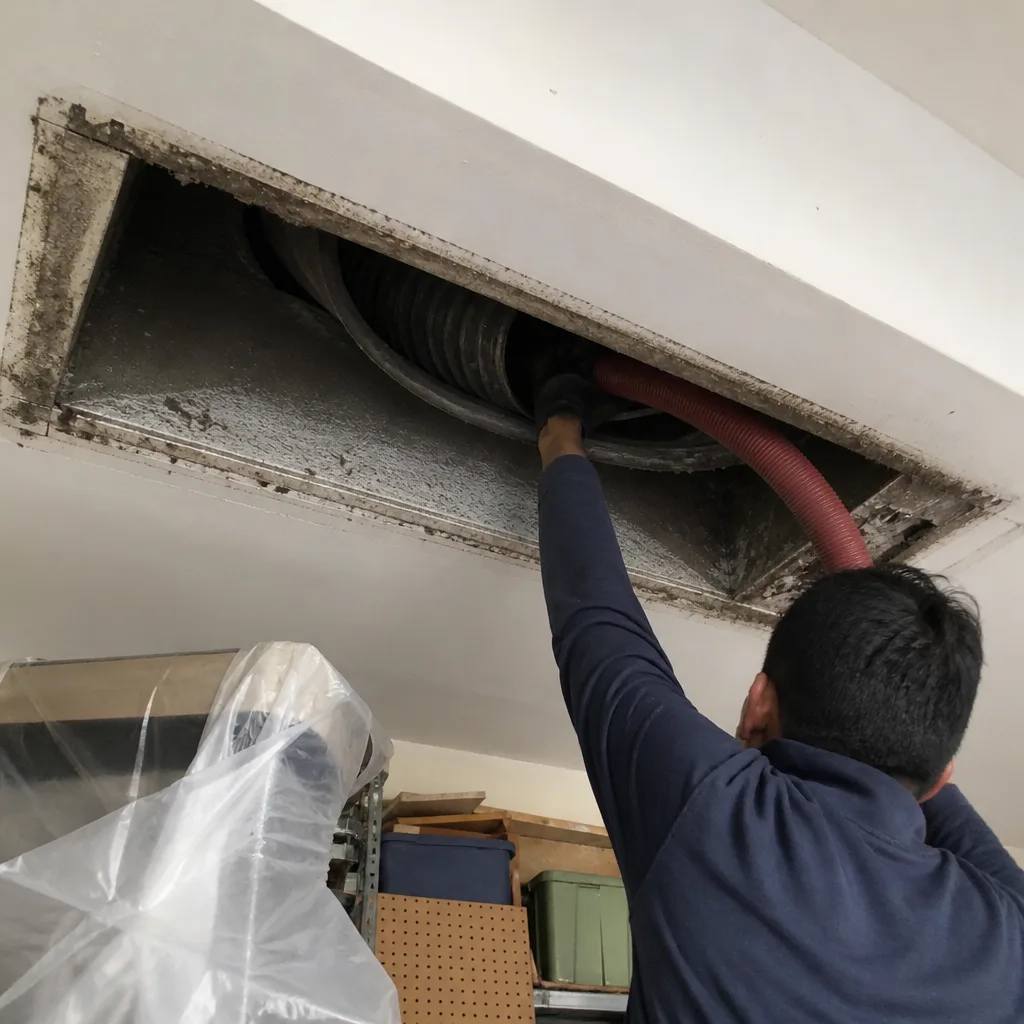 Before
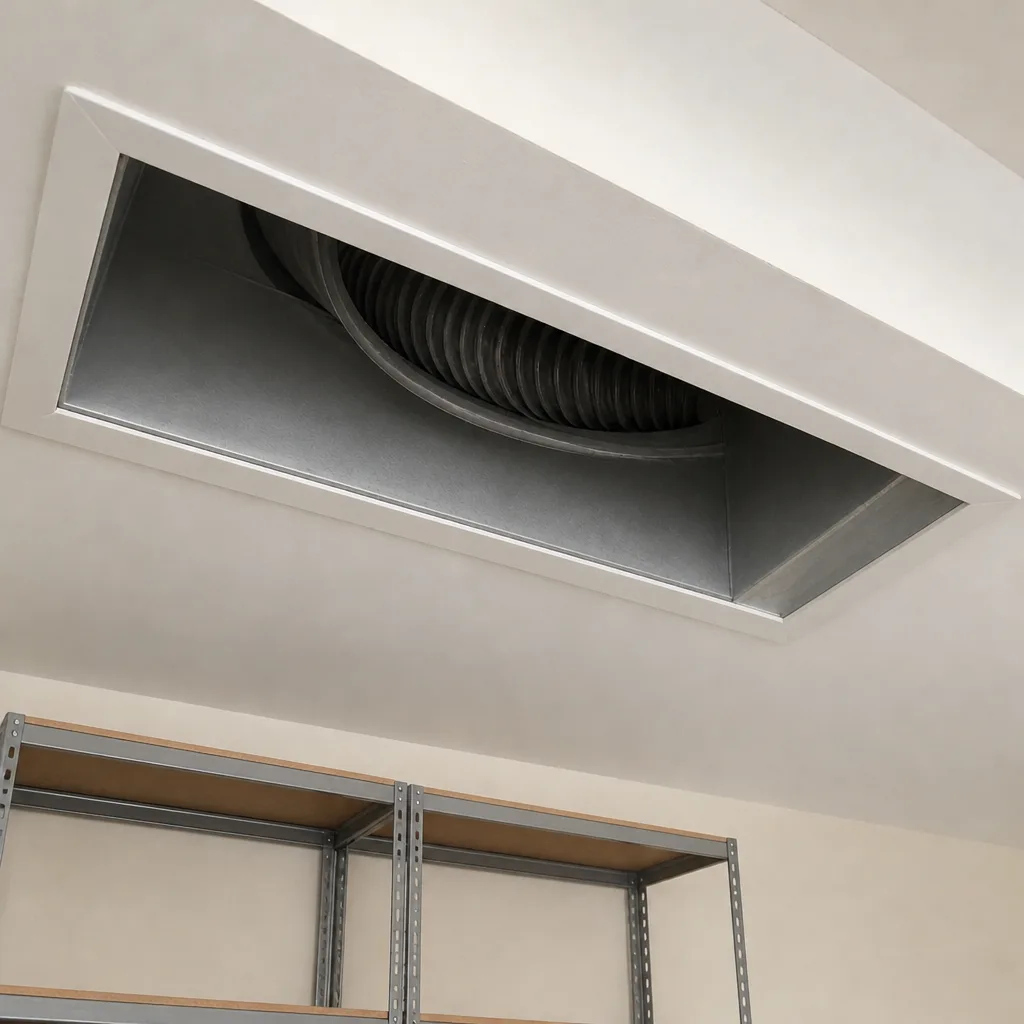 After
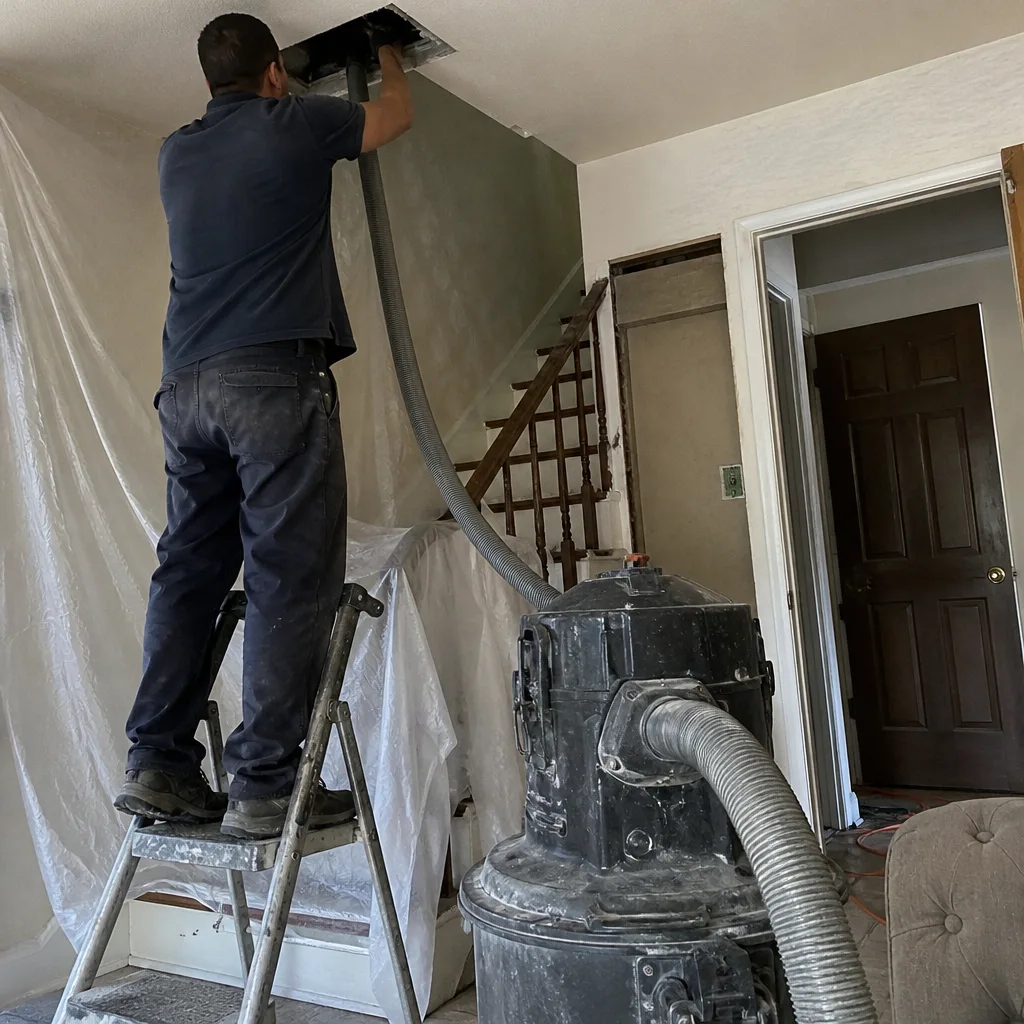 Before
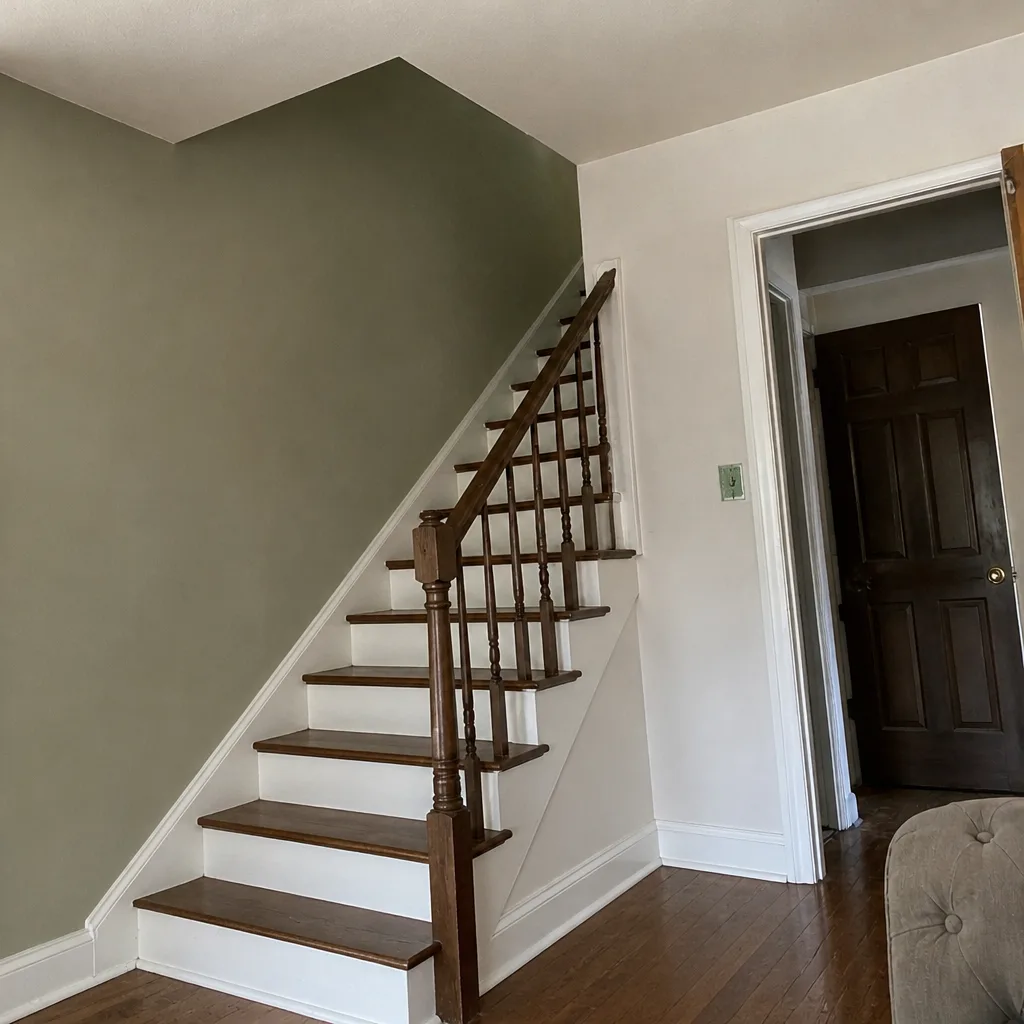 After
 Before
 After
When to Call a Professional
Call for a professional inspection if you’re seeing any two or more of the signs on this list at the same time, or any single sign on the same-week list. Burning smells, rodent contamination, visible mold, and disconnected attic ductwork all need someone qualified to look at them soon, not in a month. Even a single dust ring at one register that reappears within a few weeks of cleaning is worth a phone call, because it tells you the airflow is being pushed around a problem instead of through clean ducts. If your home was flooded and the ducts were never inspected afterward, that’s a call regardless of current symptoms.
Air Duct Cleaning Meyerland offers free estimates in Meyerland – call (877) 492-2022. We answer 24/7. Fast dispatch from 7am to 7pm, Sunday through Friday. The written estimate sets the price, and it’s one flat price per system agreed before work starts. Every job includes before-and-after photos of your own ducts, backed by a satisfaction guarantee.
Frequently Asked Questions
Duct cleaning in Meyerland is priced per system, not per vent, so the total depends on the number of systems, the amount of ductwork, and whether repair and sealing are needed. The written estimate you receive after inspection sets the final price, and it’s a flat price you agree to before any work begins. Call (877) 492-2022 for an exact quote – estimates are free.
Very low quotes usually price per vent with a low per-vent number and add charges for filters, sanitizing, or access once the technician is on site, which is how a small number becomes a large invoice. Our flat-per-system estimate covers the entire job as scoped, and before-and-after photos document what was actually removed. Call (877) 492-2022 for a straight quote.
Before-and-after photos of your own ducts show what was removed and what the duct interior looks like afterward. We photograph each system’s key access points and provide the images with the invoice, so there’s a record beyond the technician’s word. A written scope and photos of your ducts are the standard we hold ourselves to. Call (877) 492-2022 to book an inspection.
Most Meyerland homes are on a three-to-five-year cycle for duct cleaning, though homes with allergies, pets, recent renovation, or a past flood usually need it sooner. The variable that pushes the schedule shorter in this climate is humidity control, because high moisture load drives mold growth inside ducts. Sealing and a proper filtration system stretch the interval between cleanings. Call (877) 492-2022 to talk through what your home needs.
No, a single dust ring on one register with no other signs is usually normal airflow plus a slightly loose register fit, and it can be on the 30-day watch list. Multiple rings, rings that return within weeks of cleaning, or rings paired with uneven room temperatures or musty smells point to a real duct issue. Call (877) 492-2022 if it recurs.
Contaminated ducts can carry dust, mold spores, pollen, and pet dander back into the air your family breathes, and cleaning combined with filtration and sealing reduces that load. We can’t diagnose allergies, and we don’t claim to, but the equipment we use (Rotobrush, Nikro HEPA, Abatement Technologies) is chosen specifically for allergen removal. Call (877) 492-2022 for a free estimate.
The Bottom Line
Most duct warning signs are small, easy to wipe off, and easy to rationalize away. The trick is knowing which ones to read as symptoms and which to treat as background noise. Dust rings that keep coming back, uneven room temperatures, climbing runtime, and a change in smell are the four signals that mean the ductwork has a real problem, not just dust. In Meyerland, humidity and past flooding push those signals harder than in most places, so a couple of them appearing together is worth a professional look. Get the inspection, get the written scope, and fix the whole air pathway, not just the visible registers. Our technicians have up to 11 years of experience with full-system duct service, and we use the same professional equipment commercial HVAC contractors rely on.
Call (877) 492-2022 for a free estimate. We answer 24/7. Fast dispatch from 7am to 7pm, Sunday through Friday. One flat price per system agreed before work starts, and before-and-after photos so you can see exactly what the job covered.
Written by the team at Air Duct Cleaning Meyerland.