
Last updated November 25, 2026
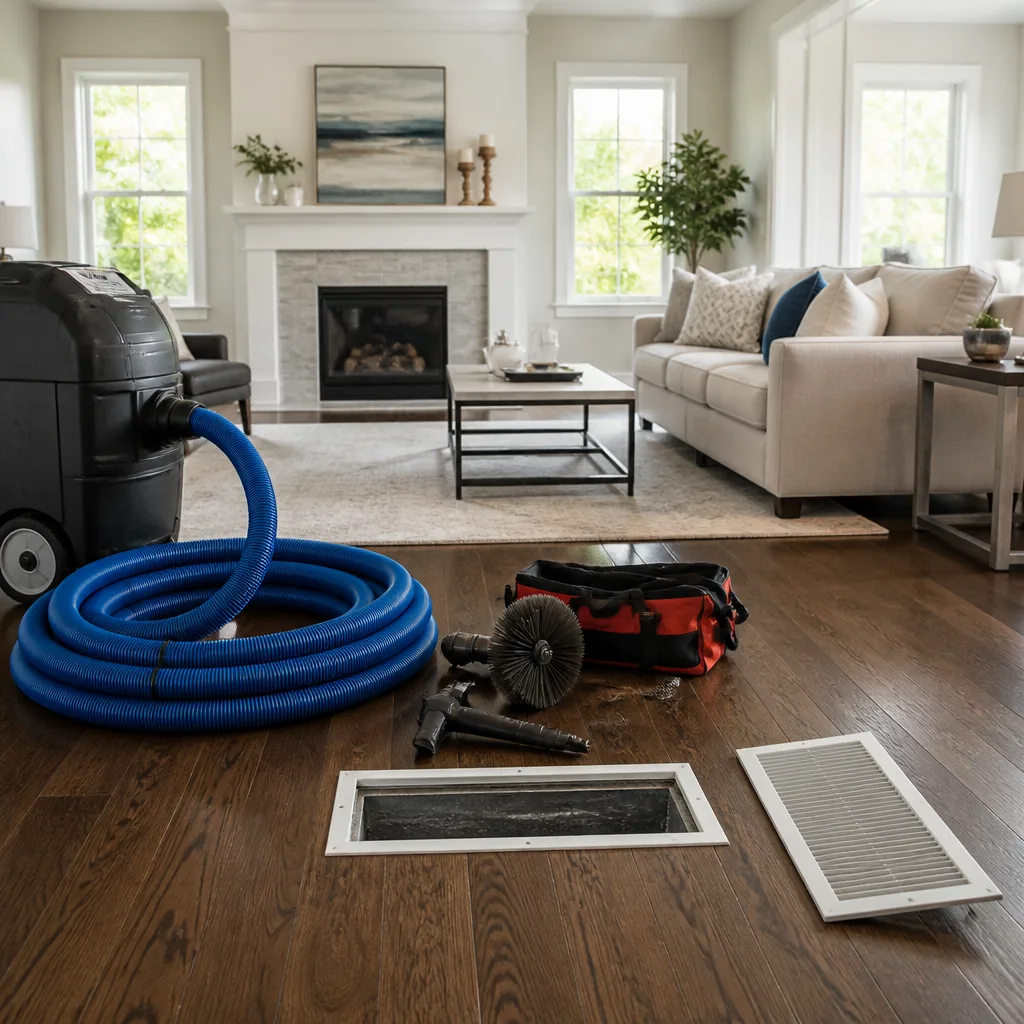 Whole-home duct cleaning
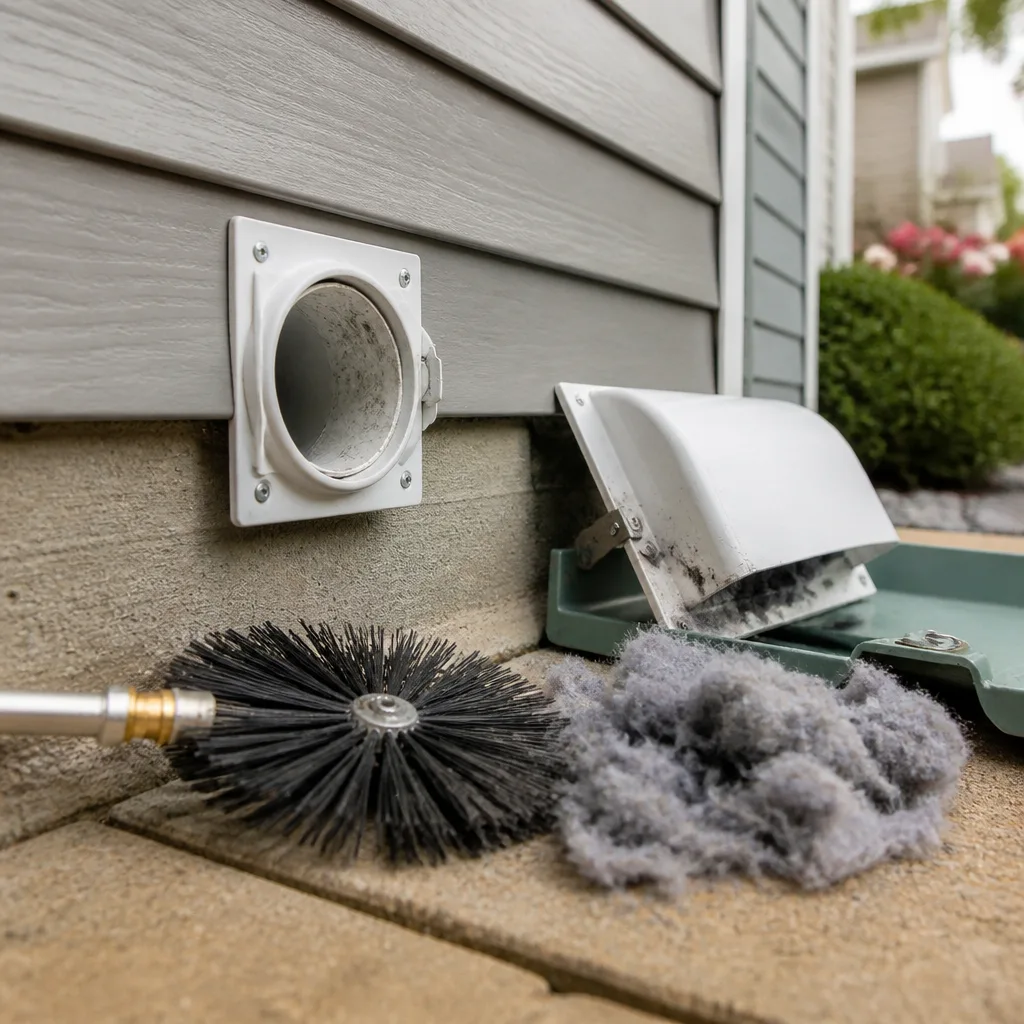 Dryer vent cleaning
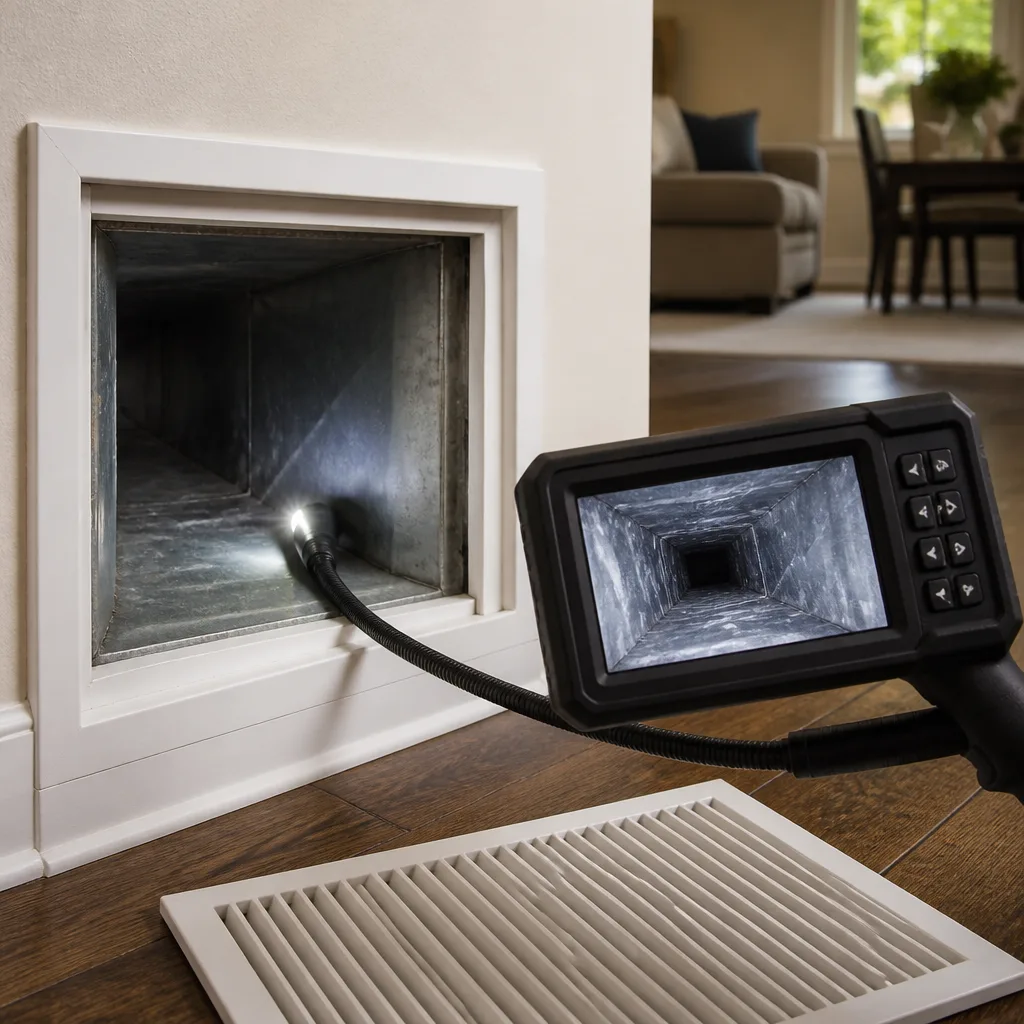 Camera inspection
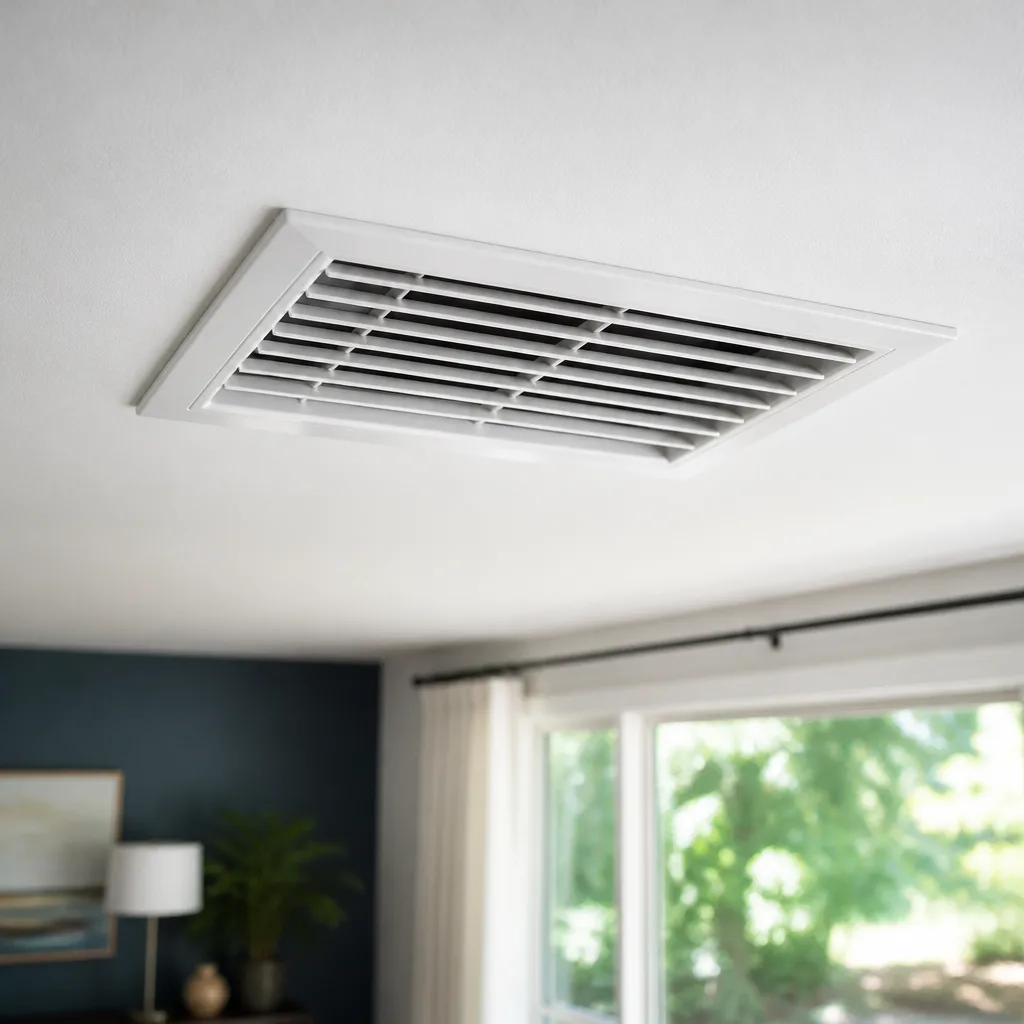 Sanitizing & deodorizing
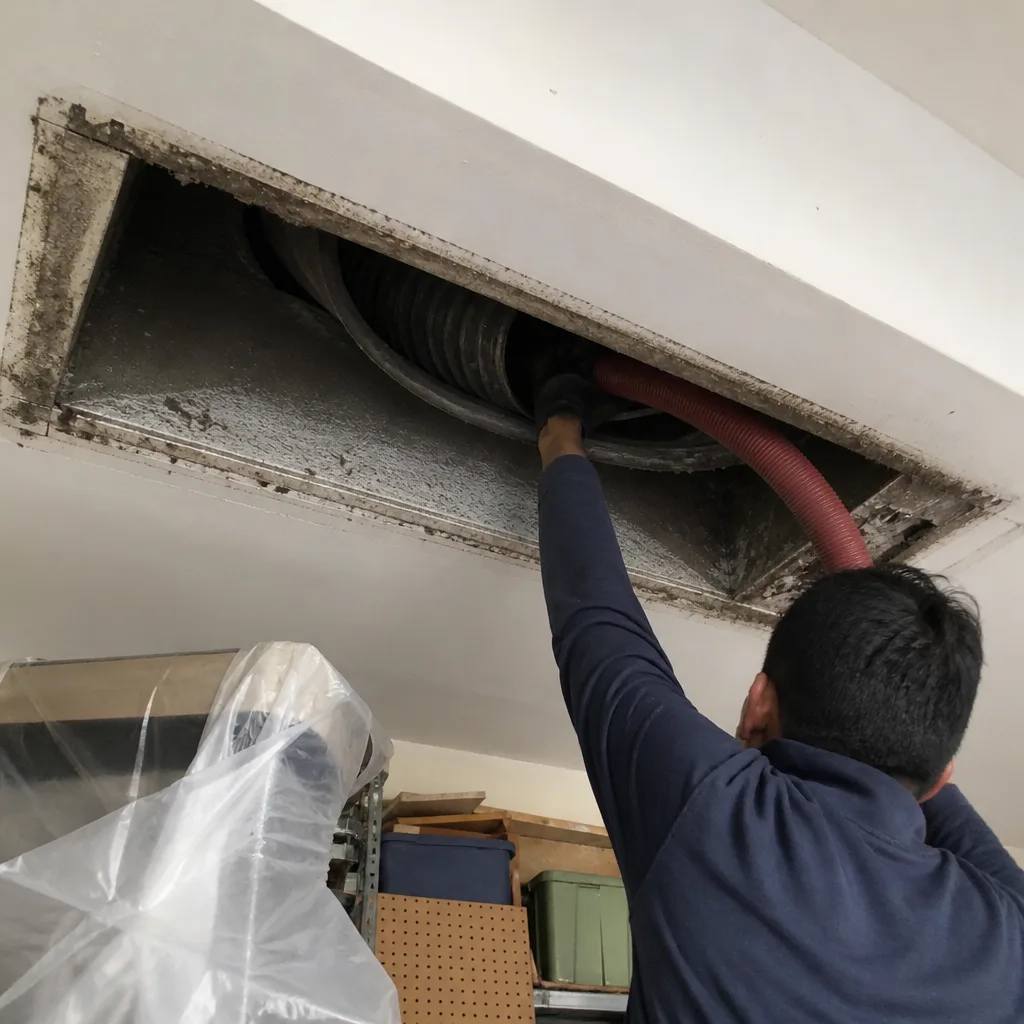
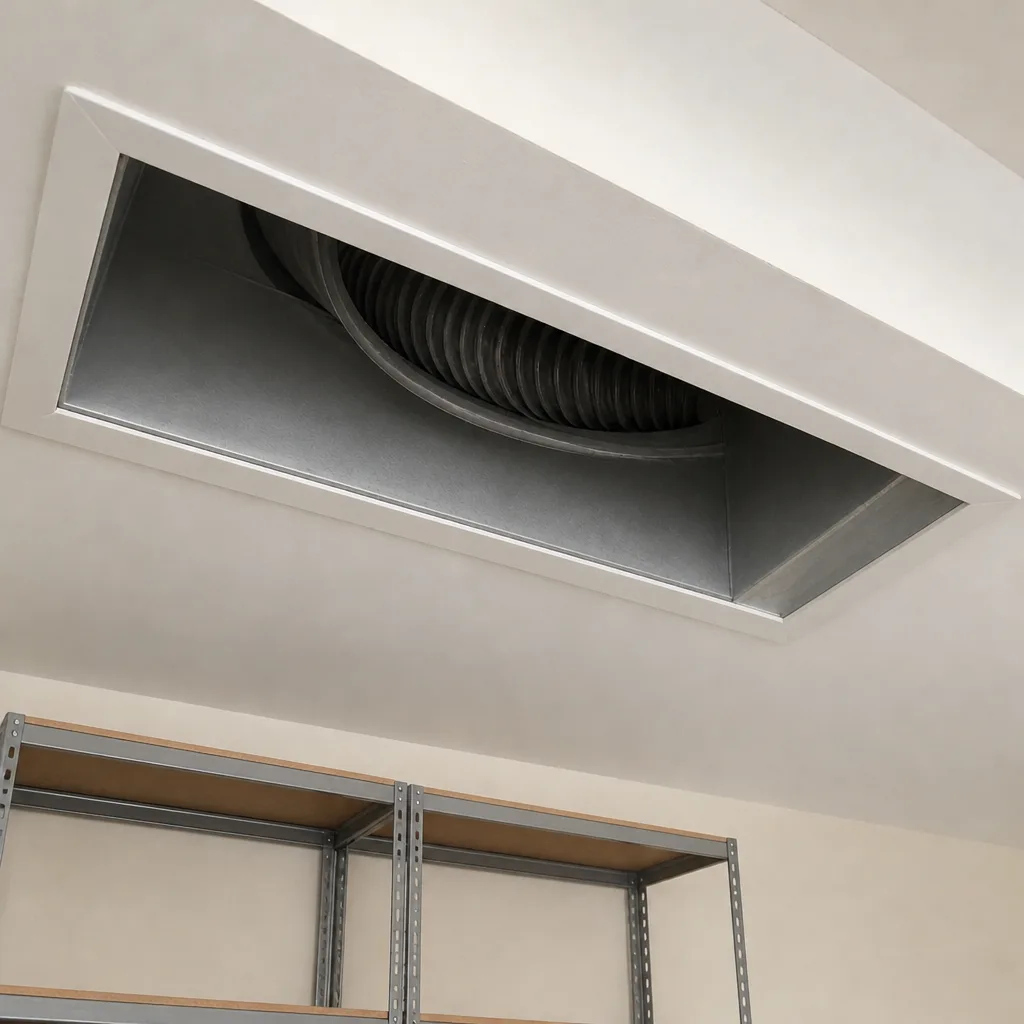
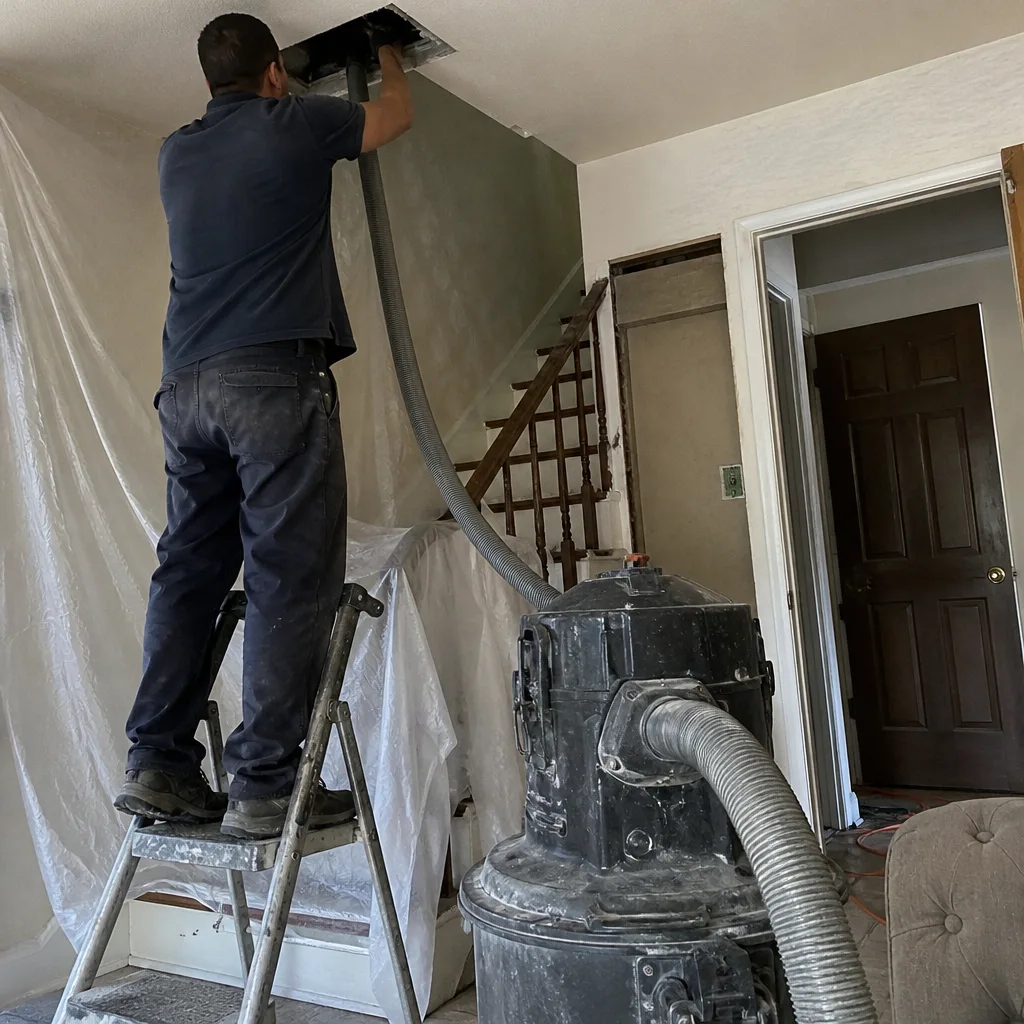
Whole-system duct and dryer vent check with before-and-after photos - you see exactly what came out of your vents
That "$99 whole-house special" is a bait ad - the real number appears once they are in your hallway, or the "clean" is a shop-vac at the register. We photograph the inside of your ducts before and after instead.
Air Duct Cleaning Emergency Preparedness Guide for Meyerland Homes
Most homeowners think the danger passes when the water recedes. In Meyerland, the more common mistake is the opposite. After a flood or a bad storm, people switch the HVAC back on to dry the house out, and that single decision pushes contaminated air through every room for as long as the system runs. The ducts were never the emergency. They’re the part that decides how long the emergency lasts. This guide walks through the exact sequence for flood intrusion, smoke damage, and storm debris in Meyerland ductwork, and it covers how to document all of it for an adjuster.
Quick Answer
After flooding or storm intrusion in Meyerland, shut down the HVAC system immediately and keep it off until a technician inspects the ducts, air handler, and every entry point. Never run the system to dry the house out. Duct cleaning after a flood emergency is not routine dust removal – it requires containment, HEPA extraction, liner inspection, and sanitizing before the system can safely restart. Call (877) 492-2022 for a free estimate. We answer 24/7. Fast dispatch from 7am to 7pm, Sunday through Friday, closed Saturday.
Styles & brands we work with
- Whole-home duct cleaning
- Dryer vent cleaning
- Camera inspection
- Sanitizing & deodorizing
Table of Contents
- What to do first after a flood reaches your ductwork
- Why running the HVAC to dry out a wet Meyerland house backfires
- Smoke and fire damage: why duct liner changes the job
- How to tell whether storm debris got into your ducts
- Remediator or duct specialist? Knowing who does what
- Documenting duct condition for an insurance claim
- The inspection sequence before restarting the system
- Staying ready before the next event
What to do first after a flood reaches your ductwork
The first hour matters more than the first week. Floodwater that reaches a register, a return grille, or the air handler itself has already introduced silt, organic material, and contaminants into the system. The ducts then hold that moisture in a dark, enclosed space where biological growth starts quickly. Your job in that first hour is to stop the system from spreading it.
- Kill the thermostat. Set it to off at the unit, not just the app. If there’s any chance the air handler is wet, cut power to the HVAC at the breaker as well.
- Photograph before you touch anything. Registers, waterlines on walls and cabinets, the air handler, and any visible debris. This is the record your adjuster will ask for.
- Do not open panels, remove insulation, or reach into duct runs yourself. Wet insulation and standing water hide electrical components inside the air handler.
- Call a duct professional for an inspection before any restoration equipment is run in the house. Fans and dehumidifiers move air; if the system is open to the ducts, that air movement matters.
What we’re describing is a sequence, not a repair. The reason it matters in Meyerland is that so many homes here have ductwork in the attic, in crawlspaces, or running low through the slab – each one wets differently and dries differently. A run that took on water needs to be found and addressed, not simply aired out.
Why running the HVAC to dry out a wet Meyerland house backfires
It feels logical. The house is wet, the AC moves air, so run the AC. The problem is what the air is moving. A wet duct system that gets pressurized spreads moisture and whatever came in with the floodwater into every room the supply registers serve, and it deposits that material on the inside of the duct walls where it stays.
There’s a second issue specific to our climate. Meyerland summers are humid enough that a wet duct system doesn’t dry quickly even with air moving through it. Running the system doesn’t create the conditions for drying – it creates the conditions for growth. The system was designed to move conditioned air, not to serve as a drying machine for a flooded structure.
What actually happens when people run the system anyway:
- Moisture and fine silt get pushed into branch runs and deposited on duct walls.
- Return-side contamination gets pulled back through the air handler and redistributed.
- Any biological growth that started in the wet duct gets aerosolized into living space.
- The air handler’s blower and coil take on debris, which complicates the equipment repair.
This is why professional duct cleaning in Meyerland after a flood event starts with the system off, not on. We use Air Duct Cleaning Meyerland-grade equipment – specifically the Rotobrush rotary brush system for mechanical agitation of duct walls and Nikro HEPA extraction for contained debris removal – because wet duct contamination doesn’t come out with a shop vac or a fan.
Smoke and fire damage: why duct liner changes the job
Combustion particulates behave differently than dust. Dust settles on surfaces; smoke travels with heat and pressure, and it embeds into the porous liner inside ductwork, into seams, and into the fibrous insulation of flex runs. The residue that stays behind is acidic and oily, and over time it continues to off-gas into the air the system delivers.
Standard cleaning – the kind that removes visible dust – doesn’t touch it. The distinction is the liner. Interior duct liner is a fibrous acoustic and thermal material. When smoke residue works into it, surface agitation isn’t enough. The liner needs to be inspected to determine whether cleaning will work or whether a section needs replacement. This is a judgment call a technician makes with the duct opened and lit, not from a photo.
After any fire in a Meyerland home, the duct response should include:
- System shutdown until the fire department releases the structure.
- Smoke residue assessment inside the air handler, plenum, and main trunk lines.
- Liner inspection to see how deeply residue penetrated.
- Mechanical cleaning of duct walls, followed by HEPA extraction.
- Sanitizing treatment appropriate to the contaminant, and the installation of an Aprilaire or Honeywell filtration or air-quality product if the situation calls for ongoing protection.
Cleaning is only half the job after fire or flood. If a section of flex duct is soaked or heat-damaged, cleaning it is wasted effort. Our HVAC cleaning scope covers the air handler, coil, and blower alongside the ducts, because smoke residue lands on those surfaces too.
How to tell whether storm debris got into your ducts
Wind-driven rain and storm debris don’t need a hole in the duct to get in. They come in through damaged outdoor equipment, displaced connections, and openings at the air handler. The warning signs are subtle and easy to miss if you aren’t looking for them.
Signs to check for on your own, without tools:
- Debris, grit, or moisture visible at any register or return grille.
- A musty or earthy smell that’s strongest near the returns.
- Registers in one part of the house blowing noticeably weaker than the rest.
- Visible damage to the outdoor condenser, the flue, or the line set where it enters the wall.
- Any storm-related roof or window damage on the same side of the house as the air handler.
An entry-point inspection picks up where the visual check stops. That’s the part that has to be done right. Do not attempt to open the air handler cabinet, disconnect flex runs, or climb into the attic around wet electrical components. An entry-point inspection involves:
- Opening and inspecting the air handler cabinet and plenum for debris intrusion.
- Checking every flex duct connection at the plenum, takeoff, and register boot for separation.
- Examining accessible duct runs for tears, crushed sections, and moisture staining.
- Checking the outdoor equipment connection and the return-air path into the house.
- Documenting airflow at each register before and after, which also becomes part of your claim file.
This is where air duct cleaning and duct repair & sealing belong together. Sealing the entry point is what stops the next storm from doing the same thing. Doing the clean and skipping the seal is how a problem gets repeated.
Remediator or duct specialist? Knowing who does what
After a large water event, two different trades overlap and the boundary between them isn’t obvious. A flood remediation company handles the structure – drying the walls, floors, and framing, removing damaged drywall, and running dehumidifiers and air movers. A duct specialist handles the air pathway – the ducts, the air handler, and every surface your system delivers air through.
They aren’t interchangeable. A remediator has the diagnostic tools and equipment for structural drying. They typically do not carry the rotary brush systems, HEPA duct extraction equipment, or the liner-inspection experience to assess the interior of ductwork. And a duct specialist doesn’t run the structural drying equipment.
The order usually works like this:
- Remediation first for structural drying and demolition, so the house isn’t reintroducing moisture into the air.
- Duct inspection while the structure is drying, so you know what you’re dealing with before the system comes back on.
- Duct cleaning, sanitizing, and any repair or sealing after structural drying is complete and before the system restarts.
- System restart and airflow verification as the final step, not the first.
We’re not a remediation company and we don’t present ourselves as one. We’re the air-side specialist – Rotobrush, Nikro, and Abatement Technologies equipment for scenarios that go beyond routine dust. If your remediator is coordinating the structure, that’s the right person to talk to about walls and floors. For the ducts, the air handler, and the air quality products that go with them, that’s the conversation we have.
Documenting duct condition for an insurance claim
Most adjusters handle duct claims on the basis of documentation, not description. “The ducts smell like floodwater” is a statement. Photos of standing water at a register, a written inspection report identifying moisture in specific runs, and airflow measurements before and after – that’s a claim. The documentation is what you collect.
What to gather after a weather event:
- Photos before any cleanup. Registers, waterlines, the air handler, and visible damage to the outdoor unit and roof.
- A dated photo log. The order matters. Adjusters look for a sequence showing what happened before mitigation started.
- Airflow notes. Which rooms felt weak, when it started, and what the thermostat was set to.
- A written professional inspection report. This is the document adjusters actually weigh. It should identify each affected duct run, the equipment used to inspect it, and the recommended scope – cleaning, sanitizing, and any repair or sealing.
- Before-and-after photos of the duct interior. We take these of your own ducts as part of the job. They’re the clearest evidence that work was done and that it addressed what the report described.
One caveat on claims: whether duct cleaning is covered, and how much, depends on your policy and your adjuster. We don’t bill your carrier directly, but we can work with your insurer and provide the documentation they ask for. Ask before you approve a scope – a report that doesn’t match what the adjuster needs results in a back-and-forth that costs you time.
The inspection sequence before restarting the system
Restarting a flooded or storm-affected HVAC system is a sequence, and doing it out of order can undo the cleaning you just paid for. The rule that matters: no air movement until all dry-side verification is complete.
- Structural drying complete. The remediator signs off that walls, floors, and cabinets are dry to standard.
- Duct inspection passed. A technician confirms no visible moisture, no active growth, and no debris in the runs.
- Air handler and coil check. Blower, coil, and plenum inspected for debris and moisture, and the condensate path cleared.
- Entry points sealed. Any separation found during the entry-point inspection is repaired and the flex connections are sealed.
- Sanitizing completed where contamination was present, followed by HEPA extraction of any residue.
- Restart and verify airflow room by room, comparing against the pre-event measurements.
If the inspection turns up a saturated or water-damaged section of flex duct, the honest answer is that it gets replaced, not cleaned. That’s not a scope we invent – it’s a section of duct that won’t dry and won’t stay clean.
Before the event, the readiness checklist looks different. It’s shorter:
- Know where your HVAC breaker is, and know how to set the thermostat to off.
- Keep a phone number for a duct specialist alongside your utility numbers.
- Have photos of your ductwork and registers already on file, before anything happens.
That last one is the difference between a claim that goes smoothly and one that stalls. Take the photos now, in daylight, while the house is dry. You’ll never have a better chance. For a scheduled air duct cleaning or a pre-season inspection, call us. Estimates are free.
Staying ready before the next event
Preparedness isn’t a one-time project. It’s a set of habits that make the next event shorter and cheaper to handle. None of it is complicated, and most of it takes an afternoon.
What a Meyerland homeowner can do between events:
- Keep the air handler accessible. If the closet or attic access is blocked, you or a technician lose time getting to it.
- Know your return-air layout. After a storm you’ll need to check returns first – that’s where debris and odor show up before registers do.
- Watch the seasonal patterns. The weeks after heavy rain are when duct problems surface. A musty smell that appears and fades is worth a look.
- Clean the dryer vent on a schedule. It’s not part of the HVAC system, but it’s part of the same air pathway and it’s the most common fire-related duct issue in any home. That’s what dryer vent cleaning addresses, and it belongs in your readiness plan.
- Consider filtration before the need. An Aprilaire or Honeywell filtration or air-quality product installed now protects the ducts during the next event rather than after it.
One piece of context that’s specific to our neighborhood: Meyerland sits on a flat, low-lying section of Houston that drains slowly in heavy rain, and many homes here have been through more than one flood event. That history changes the calculus. When a house has been wet before, the ducts need to be looked at every time, even if this event was smaller than the last one. Small amounts of moisture left in a duct from a previous event tend to compound, not fade.
We use the same equipment commercial HVAC contractors rely on – Rotobrush and Nikro – not shop vacs. Our technicians have up to 11 years of experience. And when cleaning turns up a root-cause problem, we handle the repair and sealing in the same visit, so you’re not calling a second contractor to finish the job.
Common Mistakes to Avoid
- Running the HVAC to dry out the house. It’s the single biggest mistake after a flood, and it spreads contamination through every supply register. Keep the system off until the ducts are inspected.
- Trusting a dehumidifier and fans to handle the duct side. They dry structures, not enclosed ductwork. A house can pass a structural dryness check with wet ducts still in it.
- Assuming surface cleaning handles smoke residue. Smoke works into the duct liner and into seams, and standard cleaning won’t remove it. Liner inspection is the deciding step.
- Skipping the entry-point inspection after a storm. If a flex connection separated, a cleaning without a repair leaves the same opening for the next event.
- Calling a duct cleaner before the remediator is done. Cleaning ducts in a house that’s still wet means the same material comes back in. Structure first, ducts second, restart last.
- Not photographing before cleanup starts. Adjusters work from evidence. If the first photo you take is after the water is gone, your claim gets harder to make.
- Believing a cheap quote after a disaster. Post-event duct cleaning in Meyerland involves containment, liner inspection, HEPA extraction, and sealing. A very low quote usually drops most of that, and you find out which parts were dropped when the system comes back on.
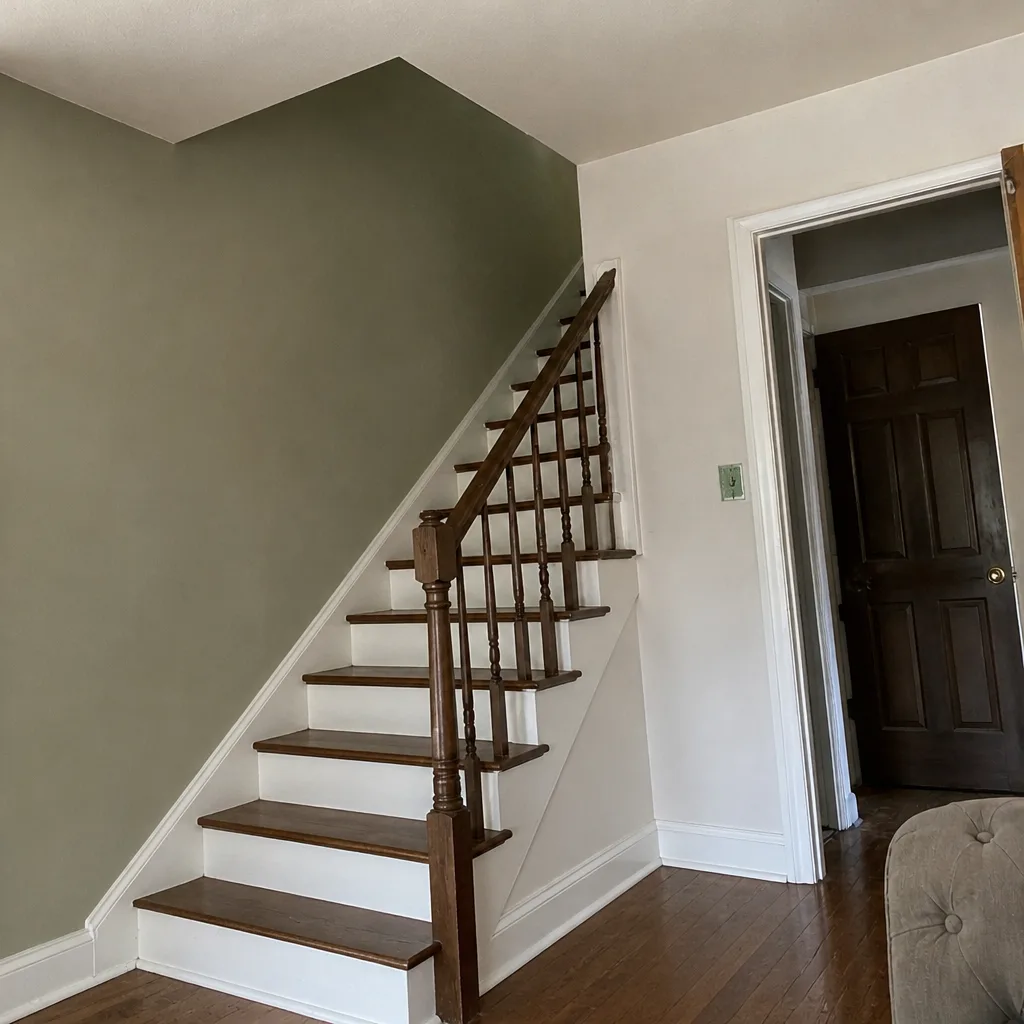
See the difference
 Before
 After
 Before
 After
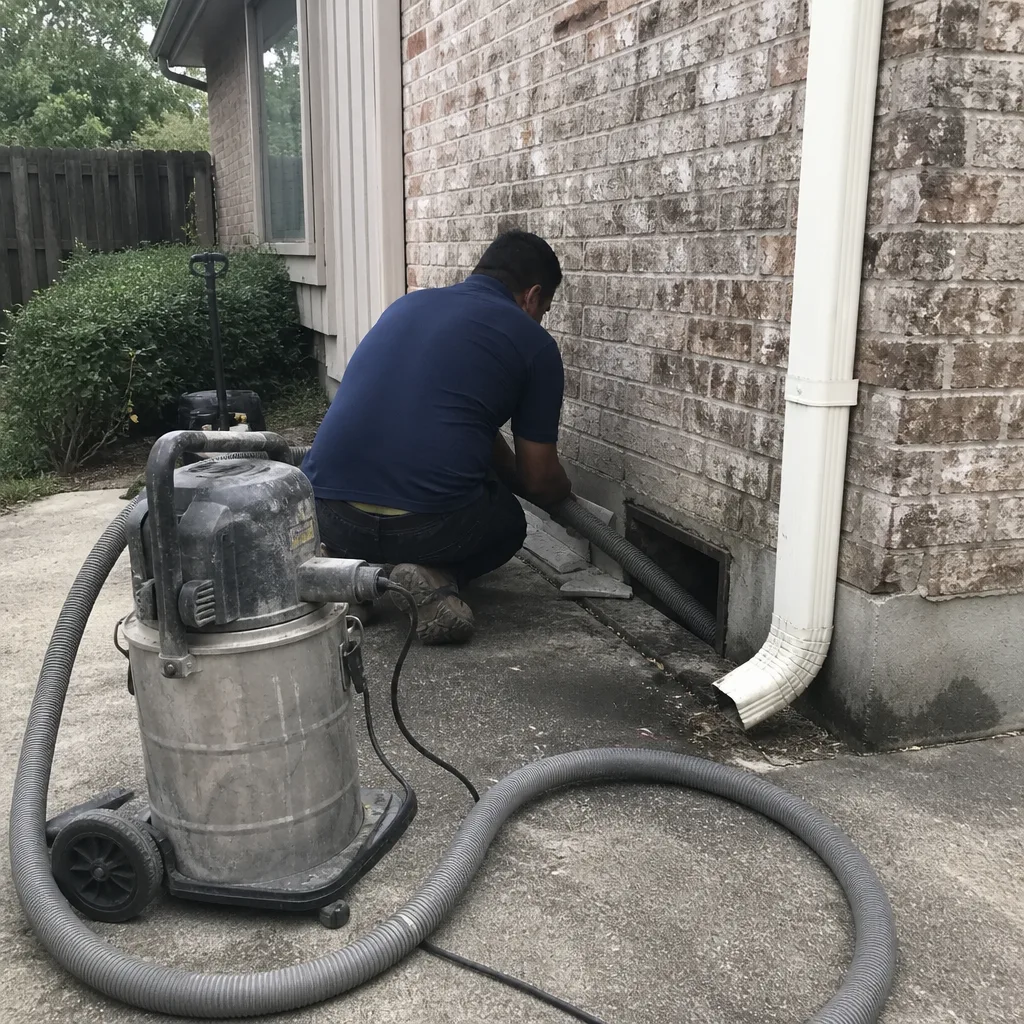 Before
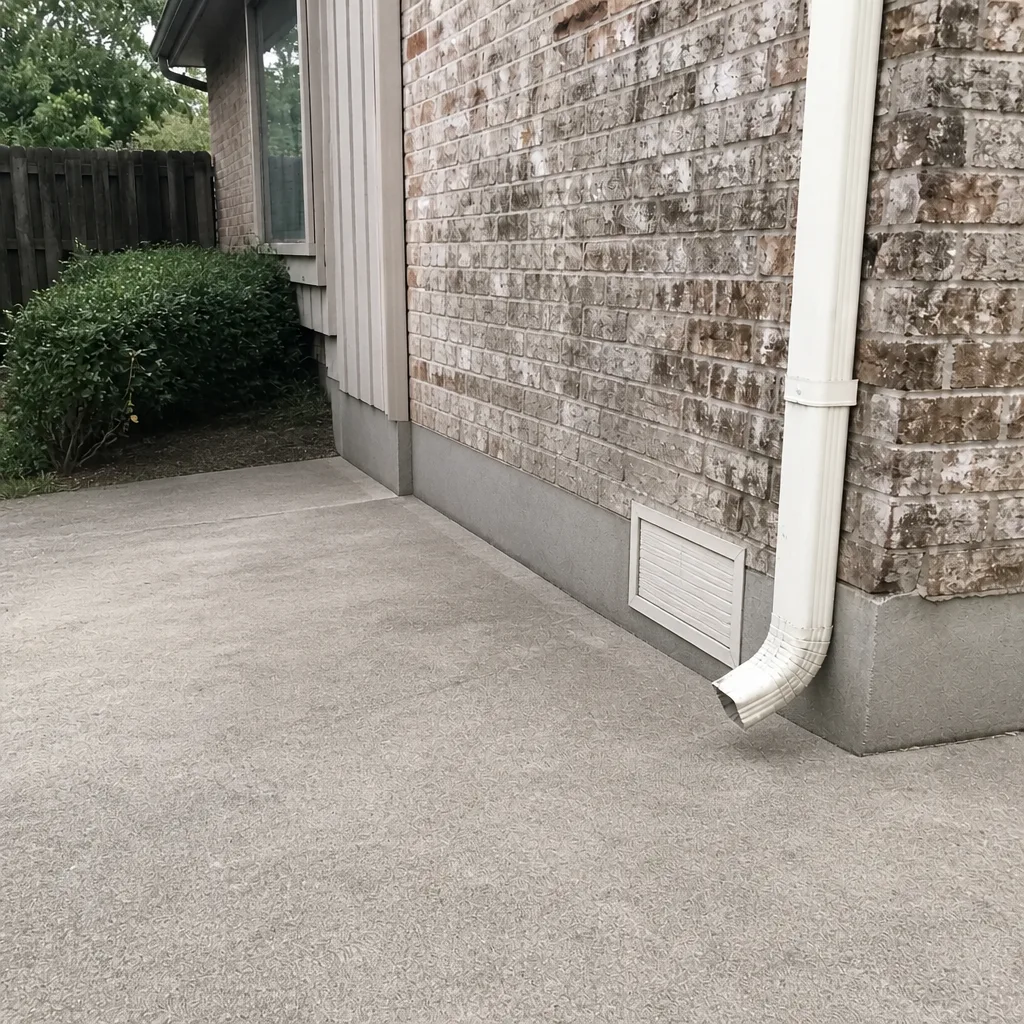 After
When to Call a Professional
Call a duct specialist for any of these: water reached a register or the air handler; any part of the system was wet; there was a fire and smoke entered the ducts; a storm opened or separated a duct connection; or a musty smell appears near a return and doesn’t clear. Also call if your remediator is finishing structural drying and the HVAC hasn’t come back on yet – that’s the moment the duct inspection belongs.
What to say when you call: what happened, whether the system is currently on, and how long it was wet. Those three things determine how the job starts. Air Duct Cleaning Meyerland offers free estimates in Meyerland – call (877) 492-2022. We answer 24/7. Fast dispatch from 7am to 7pm, Sunday through Friday, closed Saturday.
Frequently Asked Questions
Whole-system duct cleaning in Meyerland typically runs in a range set by the size of the system, the number of runs, and how much contamination is involved. Post-flood or post-smoke work sits at the upper end because of containment, liner inspection, HEPA extraction, and sanitizing. We price per system, not per vent, and the written estimate sets the final number. Call (877) 492-2022 for an exact quote – estimates are free.
No. Running the system after a flood pushes moisture and contaminants from wet ducts into every room the supply registers serve. Shut the system off at the thermostat and, if the air handler is wet, at the breaker. Keep it off until a technician inspects the ducts and entry points.
Because they leave out the parts that make the job real. A very low quote usually means no containment, no liner inspection, no HEPA extraction, and no repair or sealing on the entry points. One flat price per system, agreed in writing before work starts, is what protects you from a low teaser that turns into a larger invoice on site. Call (877) 492-2022 for an honest whole-system range.
Ask for before-and-after photos of your own ducts, which we take as part of the job, along with the written inspection report and airflow verification on restart. A technician who did the work can show it. One who didn’t has only a verbal description.
Yes. Flood-contaminated ducts require a shutdown first, containment, HEPA extraction with equipment like Nikro, liner inspection, sanitizing, and repair or sealing of any entry point before the system restarts. Routine dust cleaning doesn’t include those steps.
After any flood or storm event where water or debris entered the system, every time – not on a schedule. Between events, most homes benefit from periodic inspection, and homes with allergy concerns, pets, or heavy dust do better with more frequent scheduled cleaning. Call (877) 492-2022 and we’ll give you a straight answer about your system.
The Bottom Line
The lesson after every major flood event in Meyerland is the same: the air-handling system is the fastest way for contamination to reach every room, and the fastest way to contain it is to shut it down and inspect before restarting. Flood water requires shutdown, HEPA extraction, liner inspection, and sanitizing. Smoke requires liner assessment and a clean that goes beyond surface debris. Storm debris requires an entry-point inspection and a repair, not just a cleaning. And in all three, documentation collected before cleanup is what gets a claim paid. Preparedness isn’t a product. It’s a sequence you know before it happens.
Call (877) 492-2022 for a free estimate. We answer 24/7. Fast dispatch from 7am to 7pm, Sunday through Friday, closed Saturday.
Written by the team at Air Duct Cleaning Meyerland.