
Last updated November 25, 2026
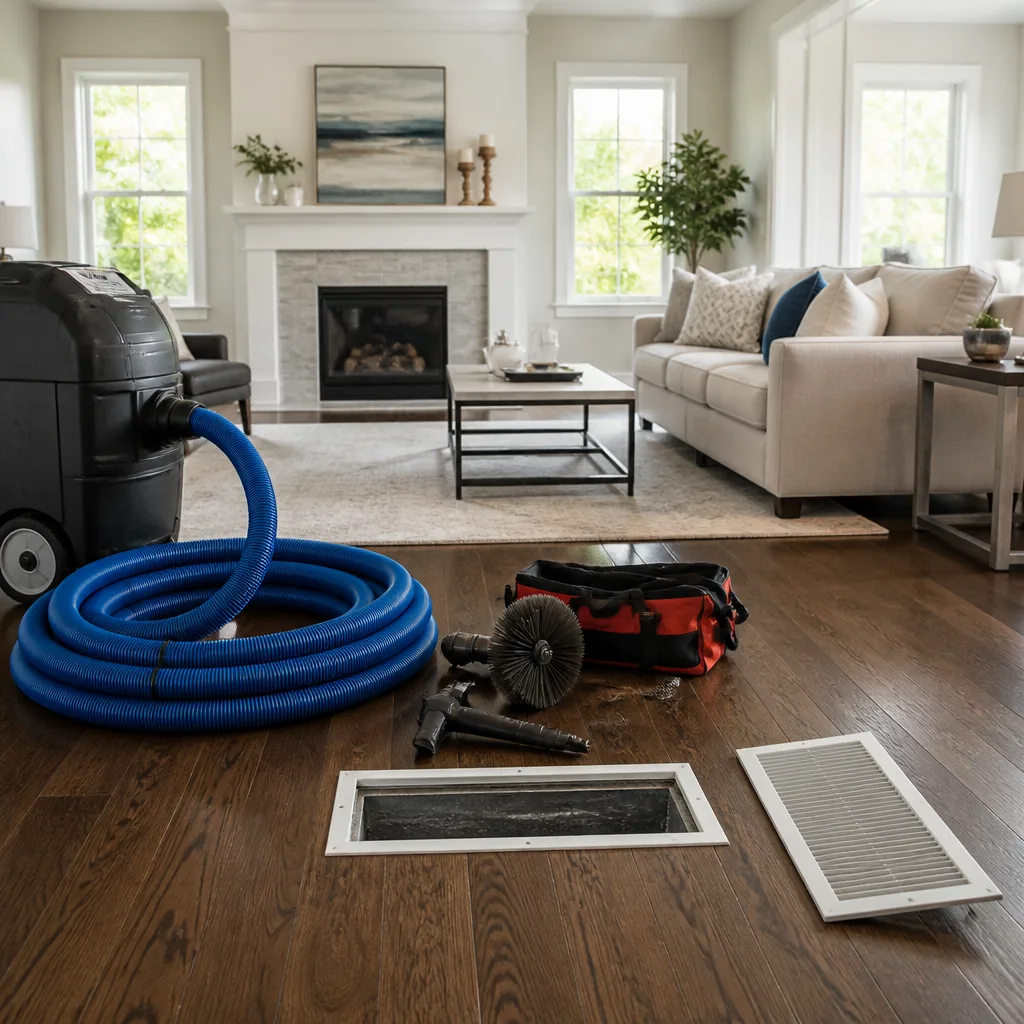 Whole-home duct cleaning
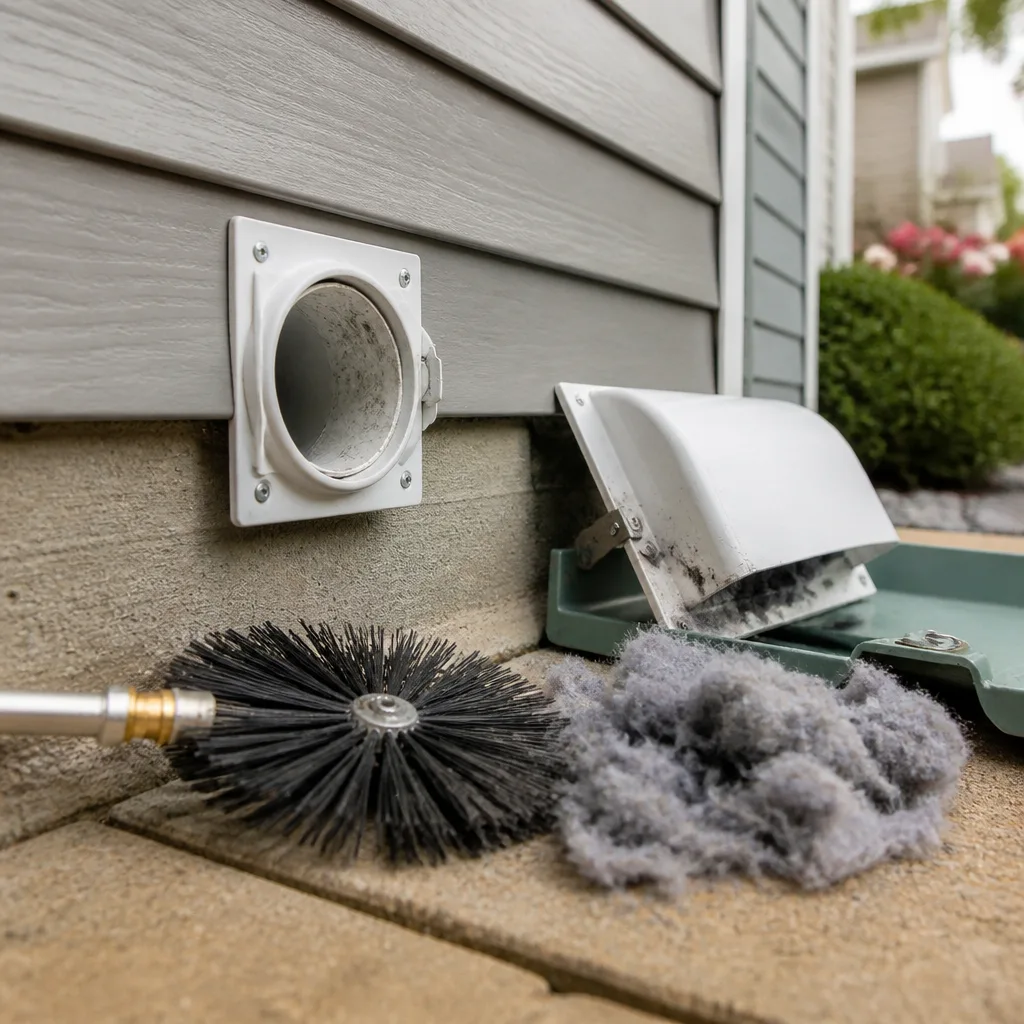 Dryer vent cleaning
 Camera inspection
 Sanitizing & deodorizing
Whole-system duct and dryer vent check with before-and-after photos - you see exactly what came out of your vents
That "$99 whole-house special" is a bait ad - the real number appears once they are in your hallway, or the "clean" is a shop-vac at the register. We photograph the inside of your ducts before and after instead.
Air Duct Cleaning Maintenance Checklist for Meyerland Homeowners
The filter you changed last month tells you almost nothing about what’s happening in the 150 feet of flex duct running through your attic at 130°F. That’s the part most Meyerland homeowners miss. A clean filter catches what reaches it; it says nothing about the dust that settled on duct walls, the condensation that formed in your attic during a March cool snap, or the supply register that’s slowly collecting a gray ring. This guide walks through a maintenance routine built for Meyerland’s specific conditions: mild winters, long humid summers, and pollen seasons that hit differently than what a national checklist assumes. You’ll learn what to check monthly, what to leave to a technician, how to read your registers for early warning signs, and how to document duct condition so you have a baseline when you sell or file a claim.
Quick Answer
A Meyerland air duct maintenance routine breaks into three layers: monthly homeowner checks (filter, registers, drain pan, unusual smells), seasonal attic inspections timed to March and October when temperature swings cause the most internal condensation, and a professional cleaning and duct inspection roughly every three to five years depending on the home. MERV 8 to MERV 11 filtration is the practical range for this climate. Seal and repair any duct leaks before cleaning, not after. And photograph your ducts on a fixed schedule so you have a documented baseline.
Styles & brands we work with
- Whole-home duct cleaning
- Dryer vent cleaning
- Camera inspection
- Sanitizing & deodorizing
Table of Contents
- Why Meyerland Duct Maintenance Is Different
- Monthly Homeowner Tasks vs. Annual Technician Tasks
- How to Read Your Supply Registers for Warning Signs
- Attic Inspection Timing: The March and October Windows
- Choosing a Filter MERV Rating for Meyerland’s Pollen Calendar
- How to Document Duct Condition Over Time
- What a Professional Duct Cleaning Actually Covers
- Why Repair and Sealing Belong in the Maintenance Routine
Why Meyerland Duct Maintenance Is Different
Meyerland sits in a climate that punishes ductwork in a slow, invisible way. Winters are mild – the kind where you might run heat for three days in January and then switch back to air conditioning by February. That constant cycling between modes, combined with a long humid cooling season, means your ducts spend more time near the dew point than ducts in a drier climate. Condensation forms on the outside of metal supply trunks and the inside of poorly insulated attic runs. Where moisture lingers, dust sticks, and where dust sticks, mold spores have something to grow on.
The other Meyerland-specific factor is the housing stock. Many homes here were built in the mid-twentieth century with original or heavily retrofitted duct systems – flex runs that snake through attics, older metal trunks, and connections that have loosened over decades of thermal expansion. A 1960s ranch home in Meyerland and a newer build two streets over can have duct problems for completely different reasons. The maintenance routine has to account for both.
What this means practically:
- Attic ductwork in Meyerland experiences far larger temperature swings than the living space, so condensation and deterioration happen faster there.
- Pollen from oak, cedar, and grass loads the return side of the system heavily in spring, and the filter is your only real defense.
- Humidity inside the home stays elevated for much of the year, which means any duct leak pulling attic air into the system brings moisture with it.
- Older duct connections loosen and leak, which is why air duct cleaning alone doesn’t fix a Meyerland system that’s losing air before it reaches a register.
None of this is meant to alarm you. It’s the opposite: once you understand how Meyerland’s climate interacts with ductwork, a maintenance routine stops feeling arbitrary and starts feeling like common sense.
Monthly Homeowner Tasks vs. Annual Technician Tasks
The line between what you should do and what a technician should do is the single most useful thing to understand in duct maintenance. Get this line wrong in either direction and you either waste money on professional visits you didn’t need, or you miss problems that a homeowner check would have caught months earlier.
What Belongs on the Monthly Homeowner Checklist
- Inspect and replace the air filter. In Meyerland’s pollen season, a filter that would normally last three months can load in weeks. Hold it up to a light – if you can’t see through it, replace it.
- Walk the registers and feel the airflow. A register that used to blow strong and now blows weak is telling you something. Note which one.
- Look for dust rings around each supply register. A faint gray halo at the grille edge means air is leaking past the seal, pulling dust with it.
- Check the condensate drain pan and line. Standing water or a musty smell means moisture is where it shouldn’t be.
- Sniff the air at a few returns. Musty, sour, or chemical odors mean something in the system needs attention.
- Confirm the thermostat is switching modes cleanly. Short-cycling can stress the system and mask a duct problem.
What Belongs on the Annual Technician Checklist
- Full visual inspection of accessible duct runs in the attic and crawlspaces.
- Checking for disconnected joints, crushed flex duct, and torn insulation.
- Measuring static pressure to see whether the system is working against a restriction.
- Assessing the evaporator coil and blower for dust accumulation.
- Cleaning or evaluating the duct interior with professional-grade equipment.
- Confirming that sanitizing or air-quality upgrades are warranted – or not.
The reason the line exists: homeowner tasks catch change over time, while technician tasks catch what you can’t see or measure. A monthly pass through the house takes five minutes. A professional assessment happens on a multi-year cadence, and both matter. When the annual inspection turns up a real problem, that’s when HVAC cleaning moves from routine to necessary.
How to Read Your Supply Registers for Warning Signs
Your supply registers are the cheapest diagnostic tool you own. They’re the visible end of a system mostly hidden behind drywall and attic insulation, and they quietly broadcast problems months before anything breaks. Learning to read them is worth more than any single gadget you could buy.
Dust Rings Around the Grille
A visible gray or black ring at the edge of a register tells you air is escaping around the seal rather than through the grille. In Meyerland’s humid air, that escaped air can also be carrying moisture into the drywall joint, which is why the ring sometimes looks darker and slightly textured. If you see consistent rings at more than two registers, the ductwork connections behind them likely need resealing.
Uneven Airflow Between Rooms
Walk the house with your hand held near each register, or use a cheap airflow meter. If one room blows hard while another barely moves air, the problem is more likely a duct issue – a disconnected run, a crushed section, a closed damper – than an equipment issue. Uneven airflow is the most common duct complaint in older Meyerland homes with long attic runs.
Condensation Streaking
Water streaks on a register, a damp spot on the ceiling nearby, or condensation on the metal duct behind the grille all point to the same thing: a temperature differential the insulation can’t handle. This is especially common during the March and October shoulder seasons, when you might run cooling in the afternoon and heat at night, and the duct never has a chance to settle into one temperature.
Black or Gray Streaks Inside the Register
Dark streaking on the inside of a grille is usually a mix of dust and fine debris accumulating on a surface that stays slightly moist. That’s not a surface-level dust problem – it’s a sign the duct behind the register has settled material that should be cleaned out, not wiped down.
Attic Inspection Timing: The March and October Windows
Attic inspection in Meyerland has a right time and a wrong time. The right times are March and October. The wrong time is the middle of a July afternoon when the attic is at its most hostile and the temperature differential between attic and living space is at its most stable. The shoulder seasons are when things get interesting.
Here’s why. In March and October, daytime highs and nighttime lows can swing thirty or forty degrees. Your HVAC system flips between heating and cooling within the same day. Ductwork that spent the afternoon carrying cold air at 55°F can, a few hours later, be carrying warm air at 100°F. Metal ducts contract and expand. Flex duct sags and recovers. Insulation that was tight in the afternoon can loosen by evening. And every one of those cycles is a small opportunity for condensation to form where warm, humid attic air meets a cold duct surface.
What an Attic Inspection Should Cover
- Look for moisture first. Stains on duct insulation, water marks on the deck, or a general dampness in the attic indicate a condensation problem worth investigating before anything else.
- Check the duct supports. Sagging flex runs restrict airflow and pool condensation at the low points.
- Look at every joint and connection. Tape that’s lifted, mastic that’s cracked, or a boot that’s pulled away from the register are all leak points.
- Confirm insulation integrity. Bare or thinning duct insulation in the attic is the fastest path to condensation in this climate.
- Photograph everything you see. The photos become your baseline for the next inspection.
If you’re not comfortable in the attic, don’t force it. A scheduled annual inspection by a technician is a reasonable substitute – just ask them to specifically check for the shoulder-season condensation patterns described above. If the inspection reveals a wet system, professional cleaning with Abatement Technologies-class equipment is often the right next step, because standard vacuuming won’t resolve a moisture problem.
Choosing a Filter MERV Rating for Meyerland’s Pollen Calendar
The generic advice to “use a MERV 13 filter” ignores both your equipment’s capacity and the actual particulate load in Meyerland’s air. Get this wrong and you can either under-filter during the heaviest pollen weeks or over-filter and choke your blower.
Meyerland’s pollen calendar looks roughly like this:
- Late winter into early spring: tree pollen, especially oak and cedar, peaks hard and fast. This is the heaviest particulate loading window of the year.
- Spring into summer: grass pollen takes over. Moderate but steady load.
- Late summer into fall: weed pollen and outdoor mold spores rise.
- Winter: the mildest particulate season here, but indoor dust and dander dominate.
The practical filter strategy:
- Baseline: MERV 8. Adequate for most homes, easy on the blower, and fine outside of pollen peaks.
- Pollen peak (roughly February through May): MERV 11. Steps up particulate capture without choking most residential systems.
- MERV 13 or higher: only if your system’s static pressure supports it. Many Meyerland homes have duct systems sized for a more modest filter, and adding restriction can reduce airflow to a point that causes its own problems. If you want that level of filtration, an Aprilaire or Honeywell media cabinet installed alongside the system is a better move than jamming a thick filter into a slot meant for a thinner one.
One more local note: change the filter on a cadence tied to the calendar, not just to how dirty it looks. During pollen peak, check every three to four weeks. Off-peak, every eight to twelve weeks is usually fine. The filter you pulled two months ago and threw away without looking is the one you’ve learned nothing from.
How to Document Duct Condition Over Time
Almost nobody does this, and almost everybody who sells a home or files an insurance claim wishes they had. Documenting duct condition is cheap, takes a few minutes a year, and turns a fuzzy “I think it’s been maintained” into a concrete record.
What to Photograph
- A wide shot of the attic from a fixed position, showing the overall duct layout.
- Close-ups of each major duct connection, labeled with the room it serves.
- Each supply register, showing the face and inside the grille.
- The filter slot, with a dated notebook page or phone screen for scale.
- Any water stains, streaking, or damage detected during the inspection – with a note on what was done about it.
How to Organize the Record
- Use a single folder – physical or cloud – that holds all duct-related records.
- Date every photo (most phones do this automatically).
- Keep receipts and inspection reports from professional cleanings in the same folder.
- Log filter changes with the MERV rating and the date – a simple sheet works.
- Note any repair or sealing work done, with photos of the before and after.
Why It Matters
When you sell a Meyerland home, a buyer’s inspector will look at the ducts. A documented maintenance record turns a list of “unknown” into a defensible positive. When you file a homeowner’s insurance claim related to water intrusion or a mold concern, a photo baseline showing that the ducts were clean and dry before the event can matter enormously. And for your own peace of mind, seeing four years of baseline photos side by side tells you whether the system is stable or slowly deteriorating – a distinction you can’t get from memory.
What a Professional Duct Cleaning Actually Covers
A meaningful professional cleaning is more than a vacuum hooked to a register. It’s a mechanical process that agitates settled debris off duct walls and extracts it under containment. Understanding what that process actually involves helps you tell the difference between a real cleaning and a quick surface pass.
Here’s how a proper cleaning typically runs:
- System assessment. The technician checks the equipment, the filter, the coil, and airflow before cleaning so they know what they’re walking into.
- Containment. HEPA-filtration equipment is set up to keep disturbed debris from migrating into the living space. This is where Nikro HEPA equipment matters.
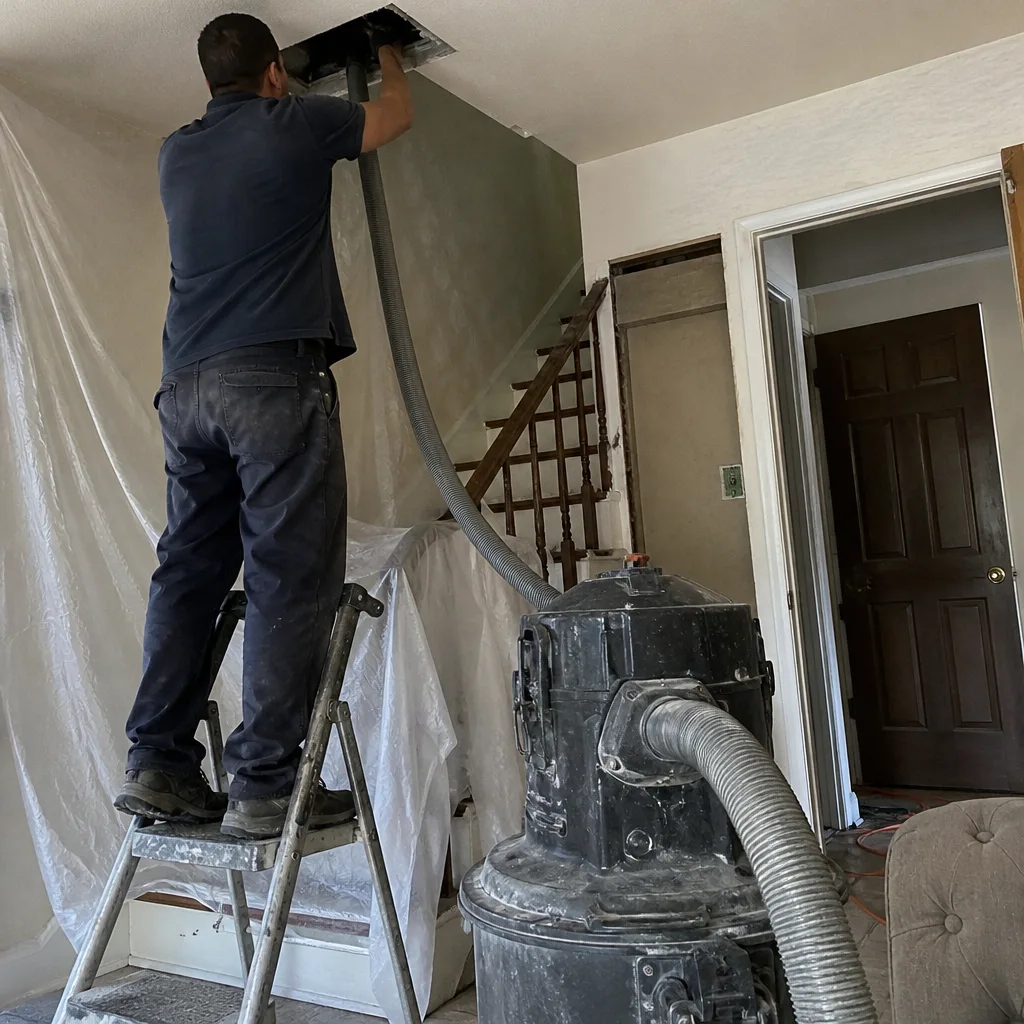
- Mechanical agitation. A rotary brush system – Rotobrush is the standard – runs through each duct run and physically loosens debris from the walls. A vacuum alone pulls loose dust but leaves the film on the walls.
- Extraction. The loosened debris is pulled out and contained.
- Sanitizing if warranted. When there’s been moisture, musty odor, or contamination, an air-quality treatment is applied so the cleaned system doesn’t grow back into the same problem.
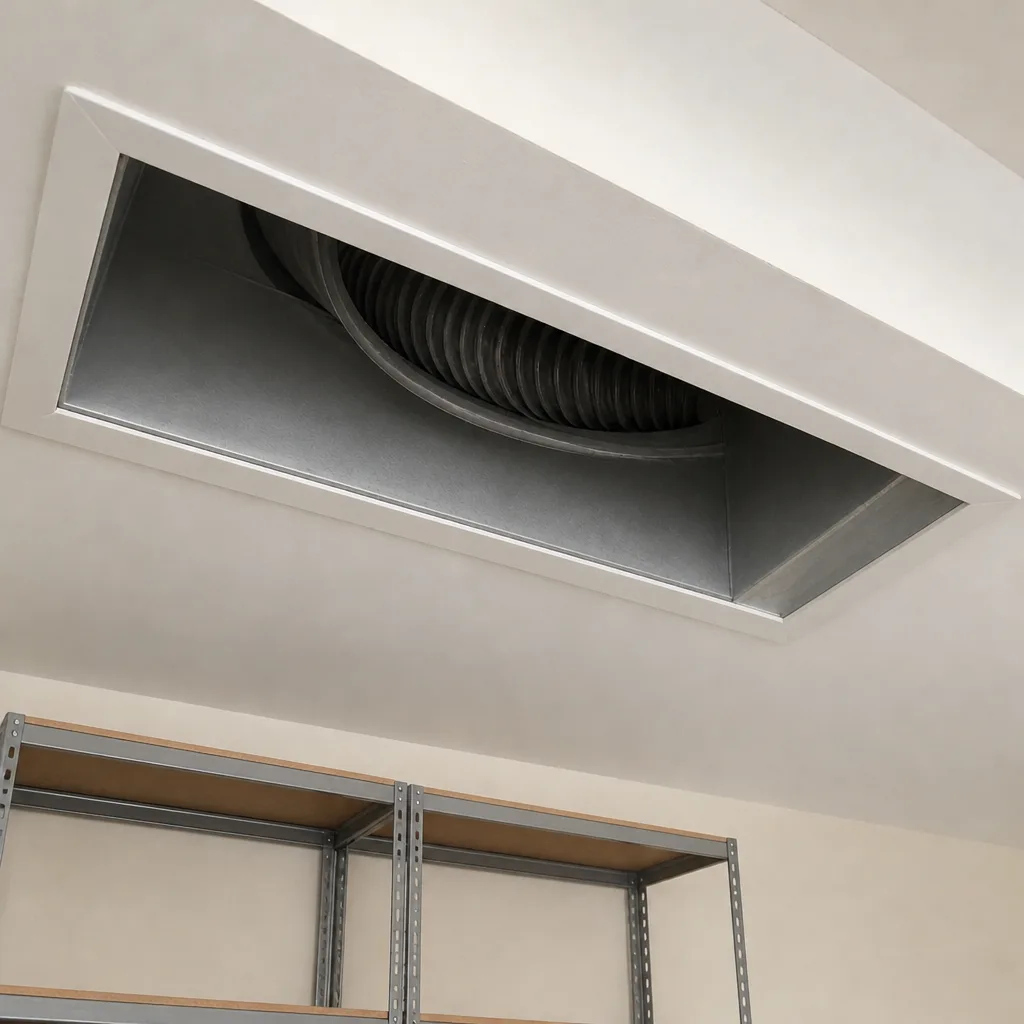
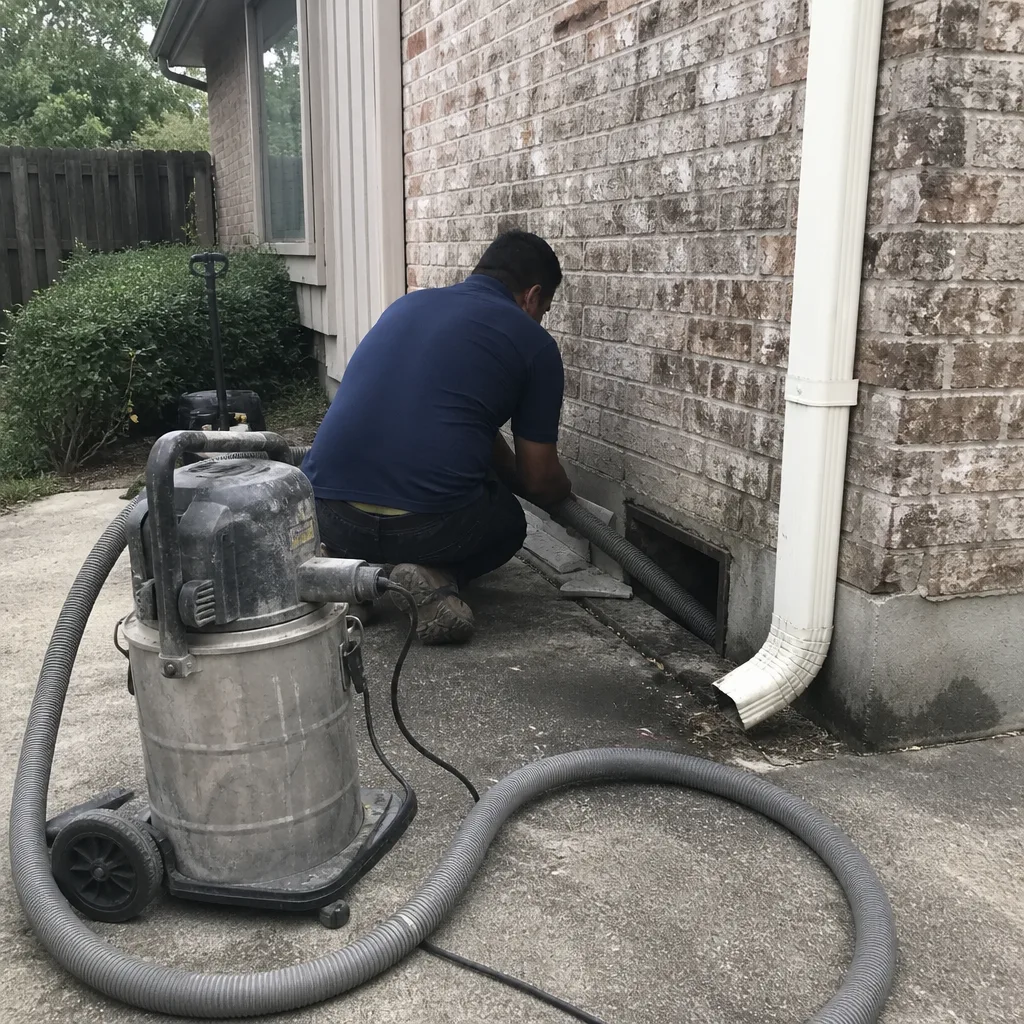
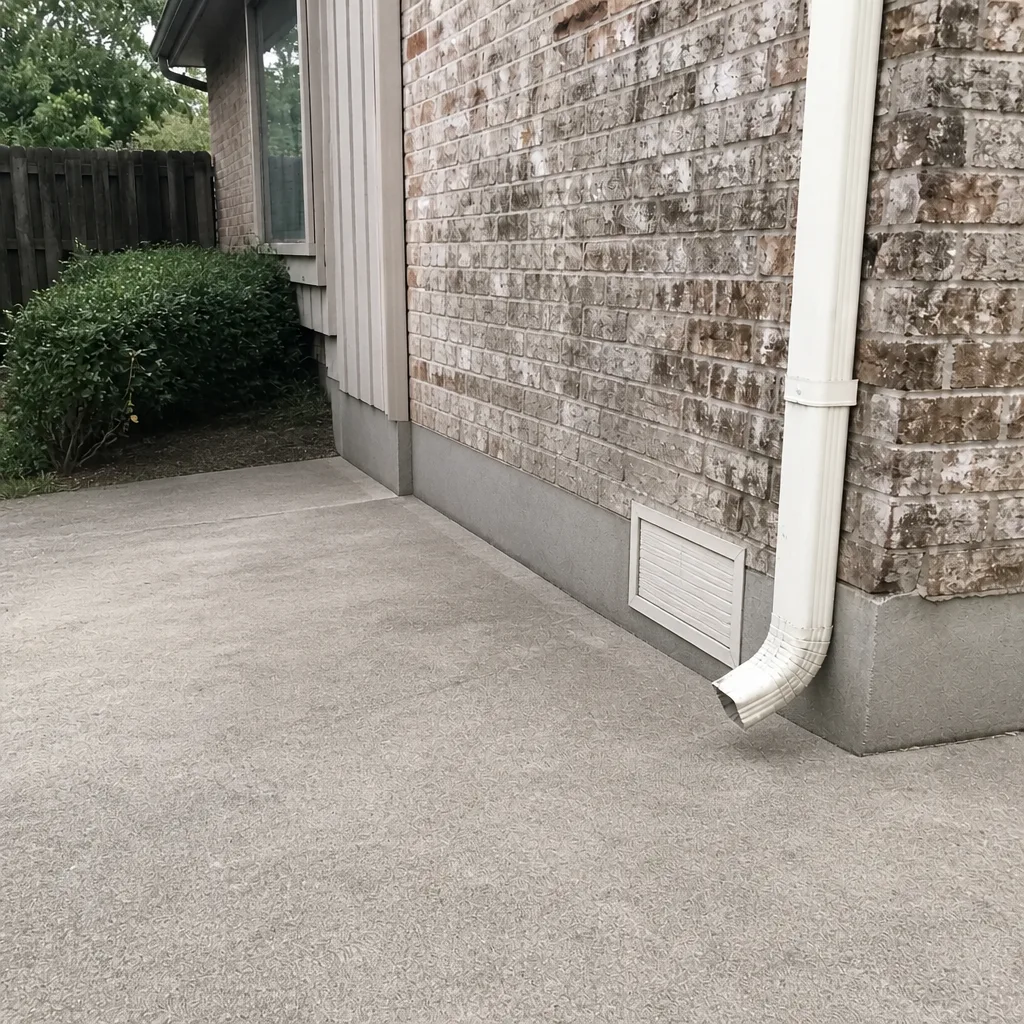
- Documentation. A good provider gives you before-and-after photos of your own ducts. Not stock photos. Yours.
The difference between a professional-grade Rotobrush system and a shop vacuum is not just power – it’s the mechanical action on the duct wall. Consumer gear can reach into a duct but can’t clean it to the same standard. That’s also why a real cleaning is a scheduled job, not something that can be handled in a twenty-minute closet visit. If a quote promises a full-house cleaning in the time it takes to make lunch, ask what equipment is going in the ducts.
On the question of how often this should happen: most Meyerland homes land on a three-to-five-year cadence. Homes with pets, recent renovation, allergies, or a history of moisture issues may need it more often. Homes with well-sealed, well-filtered systems can go longer. This connects back to what’s called Air Duct Cleaning Meyerland in our area – the same standard applies.
Why Repair and Sealing Belong in the Maintenance Routine
Cleaning a leaking duct system is a short-term win. Air loss at the joints pulls attic dust right back into the cleaned runs within weeks. Sealing is what makes the cleaning last – and it’s the piece most homeowners forget to include in the routine until a technician points it out.
The most common leak points in Meyerland homes:
- Boots where the duct meets the register – often pulled loose after years of thermal cycling.
- Tape and mastic at flex duct joints – dried out and cracked.
- Collars where a branch connects to a trunk – frequently sealed with nothing but tape.
- Torn flex duct insulation exposing the inner liner to attic air.
- Crushed or kinked runs that create airflow restrictions and condensation traps.
The routine should include a sealing check every two to three years, and every time the ducts are professionally cleaned. Sealing with proper mastic and mesh is not the same as wrapping another layer of foil tape over a problem – the tape will fail again within a season or two. A real repair addresses the connection itself.
Sealing has a measurable benefit beyond cleanliness. Every leak you close is conditioned air that stays in your ducts instead of being lost to the attic, and attic air that stays out of your ducts. In a climate where attic air carries humidity for most of the year, that matters more than it does in dry regions. When repair and sealing happen alongside a full system cleaning, the maintenance routine pays for itself in reduced load on the equipment. Dryer vent maintenance – dryer vent cleaning in particular – belongs on the same annual pass, because a clogged dryer vent is its own safety issue and gets worse quietly.
Common Mistakes to Avoid
- Replacing the filter on autopilot. Changing the filter every ninety days regardless of pollen season means you’re under-protected during the heaviest weeks and over-changing during the lightest. Check the filter, don’t just change it.
- Going straight to a MERV 13 filter to “improve air quality”. Most Meyerland duct systems are sized for a more modest filter, and choking the blower creates its own problems. Match the filter to the system, not to the marketing.
- Cleaning ducts that are still leaking. Cleaning before sealing is like mopping a floor with the window open. Seal the leaks first, then clean, then keep them clean.
- Skipping the March and October attic inspections. Those shoulder-season windows are when condensation does the most damage, and they’re also the easiest inspections to skip because nothing feels wrong yet.
- Wiping dust off the register instead of investigating it. A dust ring on the grille is a symptom, not the problem. Wiping it away hides the signal without fixing the seal behind it.
- Never taking a baseline photo. Without documentation, “my ducts are fine” is a guess. With documentation, it’s a fact – one you can defend when you sell or need to file a claim.
- Hiring on price alone. The cheapest quote is often the one that uses consumer-grade equipment, skips containment, and leaves without photos. Ask what equipment is used, whether sealing is included, and whether before-and-after photos of your own ducts are provided.
See the difference
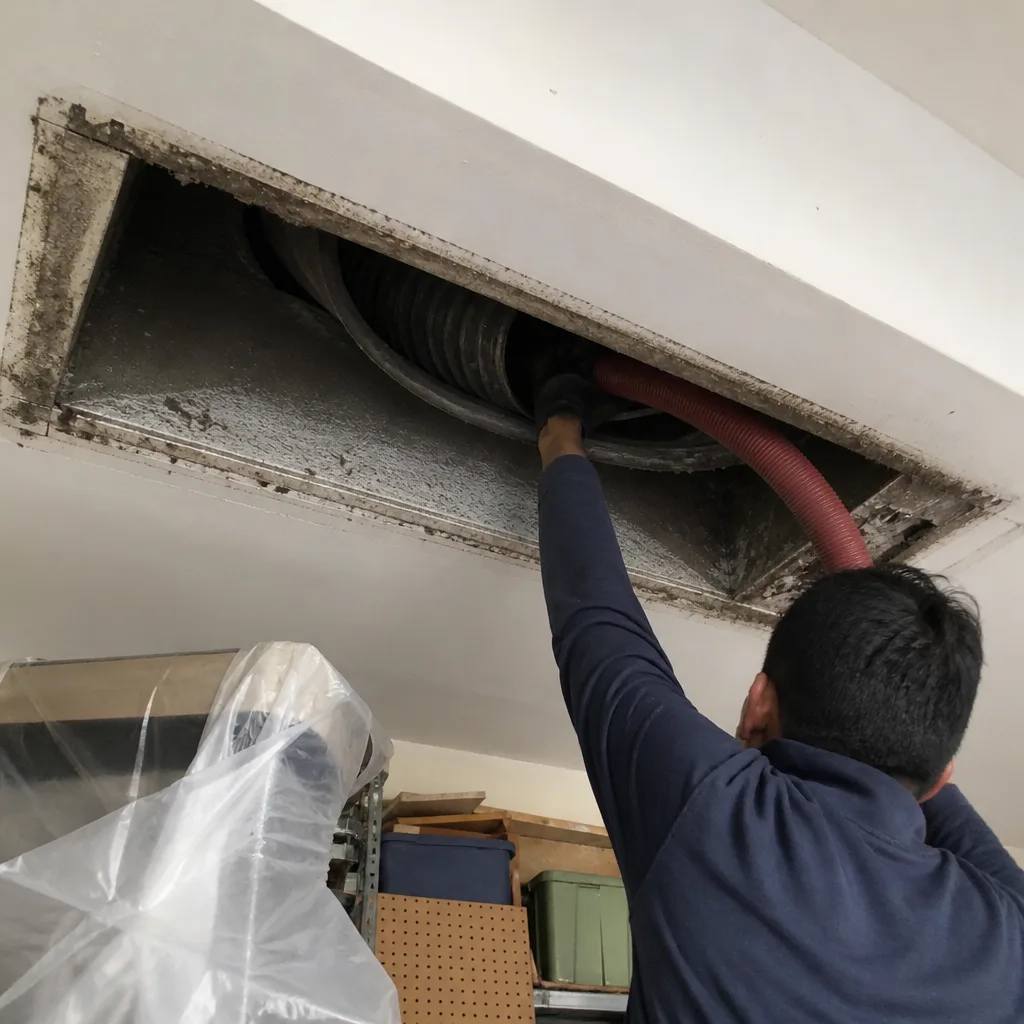 Before
 After
 Before
 After
 Before
 After
When to Call a Professional
Some problems are homeowner territory. Others are not. Call a professional when you notice musty or sour odors coming from more than one register, when condensation streaks or water stains appear near the ductwork, when a room’s airflow has dropped noticeably and stayed down, when visible dust or debris accumulates at the registers faster than normal, or when it’s simply been several years since the last cleaning and inspection. Call sooner if anyone in the house has ongoing allergy symptoms that seem tied to being indoors. Do not go into the attic and start opening ductwork yourself – improper handling of a contaminated system can spread debris into the living space, and a thorough inspection needs to see the whole run, not just the visible bit. Air Duct Cleaning Meyerland offers free estimates in Meyerland – call (877) 492-2022. We answer 24/7, with fast dispatch from 7am to 7pm, Sunday through Friday.
Frequently Asked Questions
Most Meyerland homes should be professionally cleaned and inspected roughly every three to five years, with annual visual inspections in between. Homes with pets, recent renovation, allergies, or a history of moisture issues may need more frequent cleaning, and homes with well-sealed and well-filtered systems can go longer. The right cadence depends on the home, which is why an inspection baseline matters more than a fixed rule.
MERV 8 is a safe baseline for most Meyerland homes, stepping up to MERV 11 during the tree and grass pollen peaks from roughly February through May. Higher ratings like MERV 13 should only be used if your system’s static pressure supports it – many homes here are sized for a more modest filter. If you want that level of filtration without the airflow penalty, an Aprilaire or Honeywell media cabinet is a better solution than a thick filter crammed into a thin slot.
Cheap quotes usually reflect one of three shortcuts: equipment (a shop vacuum or truck-mounted vacuum without rotary agitation), containment (no HEPA setup, so debris ends up in the air), or documentation (no before-and-after photos of your own ducts). A meaningful cleaning uses professional-grade equipment like Rotobrush and Nikro, runs mechanical agitation on the duct walls, and shows you the results. If a quote skips any of those, it’s not the same service. Call (877) 492-2022 for a real estimate – estimates are free.
You should receive before-and-after photos of your own ducts, not stock images, along with a description of what was cleaned and what was found. The technician should also walk you through any issues spotted – leaks, moisture, failing connections – and explain what was and wasn’t addressed. If a provider doesn’t offer photos, ask. The answer tells you a lot. Call (877) 492-2022 to schedule a free estimate.
You can remove surface dust from a register with a shop vacuum, but you can’t mechanically clean a duct run without professional-grade equipment. The film attached to duct walls needs rotary agitation to break loose, and a shop vacuum without HEPA containment can actually distribute fine debris into your living space. For anything beyond the register face, bring in equipment designed for the job.
Yes, in most Meyerland homes – visible ductwork frequently looks intact from the outside while the joints inside are leaking. Tape dries out, mastic cracks, and boots pull loose after years of thermal cycling, and in this climate those leaks pull humid attic air into the system. A sealing check every two to three years, and every time ducts are cleaned, is the routine that keeps a cleaning from undoing itself.
The Bottom Line
A duct maintenance routine in Meyerland is a layered thing, not a single task you memorize. Monthly homeowner checks catch change over time. March and October attic inspections catch the shoulder-season condensation that this climate quietly produces. A professional cleaning on a three-to-five-year cadence, paired with repair and sealing, resets and protects the system. Filter choice should follow the pollen calendar and your equipment’s capacity, not a national rule. And documenting it all – photos, dates, receipts – protects your investment when you sell or need to file a claim. If any of this feels like more than you want to take on alone, the whole system can be inspected, cleaned, sealed, and documented in a single visit. Call (877) 492-2022 for a free estimate and we’ll walk you through what your Meyerland home actually needs.
Our technicians have up to 11 years of experience, and we use the same equipment commercial HVAC contractors rely on – Rotobrush and Nikro – not shop vacuums. Cleaning is only half the job. We also seal and repair so cleaned ducts stay clean.
Written by the team at Air Duct Cleaning Meyerland.